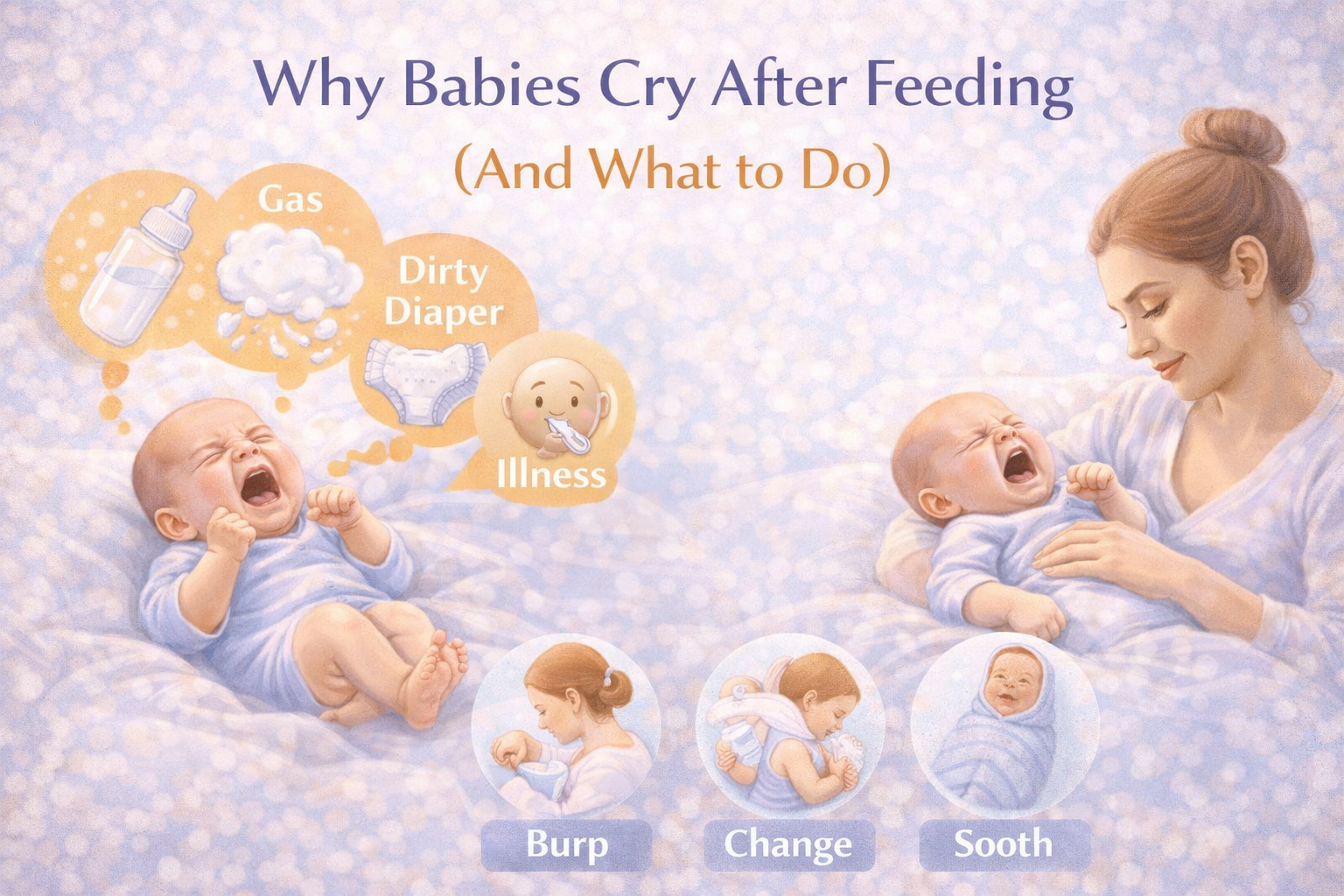
Why Babies Cry After Feeding (And What to Do)
You have just finished a lovely feed and your baby starts crying again. It can be baffling, exhausting, and — honestly — a little disheartening. But there are very specific reasons why this happens, and most of them are very easy to address.
7 Common Reasons Babies Cry After Feeding
1. Trapped Wind (Gas)
The most common culprit! During feeding, babies swallow air. If it gets trapped, it causes discomfort.
What to do: Burp your baby mid-feed and again at the end. Hold upright for 10-15 minutes after feeding.
2. Still Hungry
Your baby may not have got enough during the feed — especially with breastfeeding where you cannot see the amount.
What to do: Offer the breast again. Make sure baby has a deep latch and is actively swallowing, not just comfort sucking.
3. Reflux
Gastroesophageal reflux is when stomach acid comes back up the oesophagus. It is painful and common in babies under 12 months.
What to do: Keep baby upright for 20-30 minutes after feeds. Speak to your GP if reflux seems severe.
4. Overstimulation
After a long feeding session, some babies become overwhelmed by light, noise, or activity.
What to do: Move to a calm, dim room. Swaddle if needed. Lower your voice and reduce stimulation.
5. Nipple Flow Too Fast or Too Slow
For bottle-fed babies, the teat flow matters a lot. Too fast causes choking and air swallowing; too slow causes frustration.
What to do: Match the teat to your baby's age and ability. Newborns need a slow-flow teat.
6. Milk Protein Allergy or Intolerance
Some babies react to the proteins in formula or to dairy in mum's diet. This causes gut discomfort and crying after feeds.
What to do: Speak to your GP. Do not change formula without medical guidance.
7. Normal Fussiness (Witching Hour)
Some babies are simply more fussy in the evening — this is developmental and not related to feeding at all.
What to do: Motion, white noise, skin-to-skin contact, and patience. This phase does pass!
How to Burp a Baby Properly
Give each position 2-3 minutes before switching. Not all babies burp loudly — small ones count too!
Quick Checklist: After Feed Crying
Written by First Choice Club Team – Baby Care Experts”
Disclaimer
This content is for educational purposes…
First Choice Club | Baby & Parenting Tips
SEO Meta Description: Find out why your baby cries after feeding and exactly what to do. Covers trapped wind, reflux, hunger, overstimulation, and more with practical tips. |
27 Mar