.png)

.png)
.png)
.png)
.jpg)


Obstetrician Services
.png)
Gestational Diabetes Management

women and children hospital

women and child welfare
.png)
IVF and Fertility Clinics
.png)
Natural Birth Centers
.png)
Midwifery Services
Obstetrician Services
Gestational Diabetes Management
women and children hospital
women and child welfare
IVF and Fertility Clinics
Natural Birth Centers
Midwifery Services
Obstetrician Services
Gestational Diabetes Management
women and children hospital
women and child welfare
IVF and Fertility Clinics
Natural Birth Centers
Midwifery Services
.png)
.png)
Prenatal Massage Therapy
.png)
Maternity Facials and Skincare

Relaxation and Meditation Sessions
.png)
Maternity Pedicures and Manicures
.png)
Hydrotherapy for Pregnant Women
Prenatal Massage Therapy
Maternity Facials and Skincare
Relaxation and Meditation Sessions
Maternity Pedicures and Manicures
Hydrotherapy for Pregnant Women
Prenatal Massage Therapy
Maternity Facials and Skincare
Relaxation and Meditation Sessions
Maternity Pedicures and Manicures
Hydrotherapy for Pregnant Women

.png)
Health Insurance
.png)
Financial Planning for Baby
.png)
Life Insurance Planning

Birth Certificate for Newborn Baby
Health Insurance
Financial Planning for Baby
Life Insurance Planning
Birth Certificate for Newborn Baby
Health Insurance
Financial Planning for Baby
Life Insurance Planning
Birth Certificate for Newborn Baby









.png)


.png)

Connecting parents with trusted baby services, from healthcare to baby products.
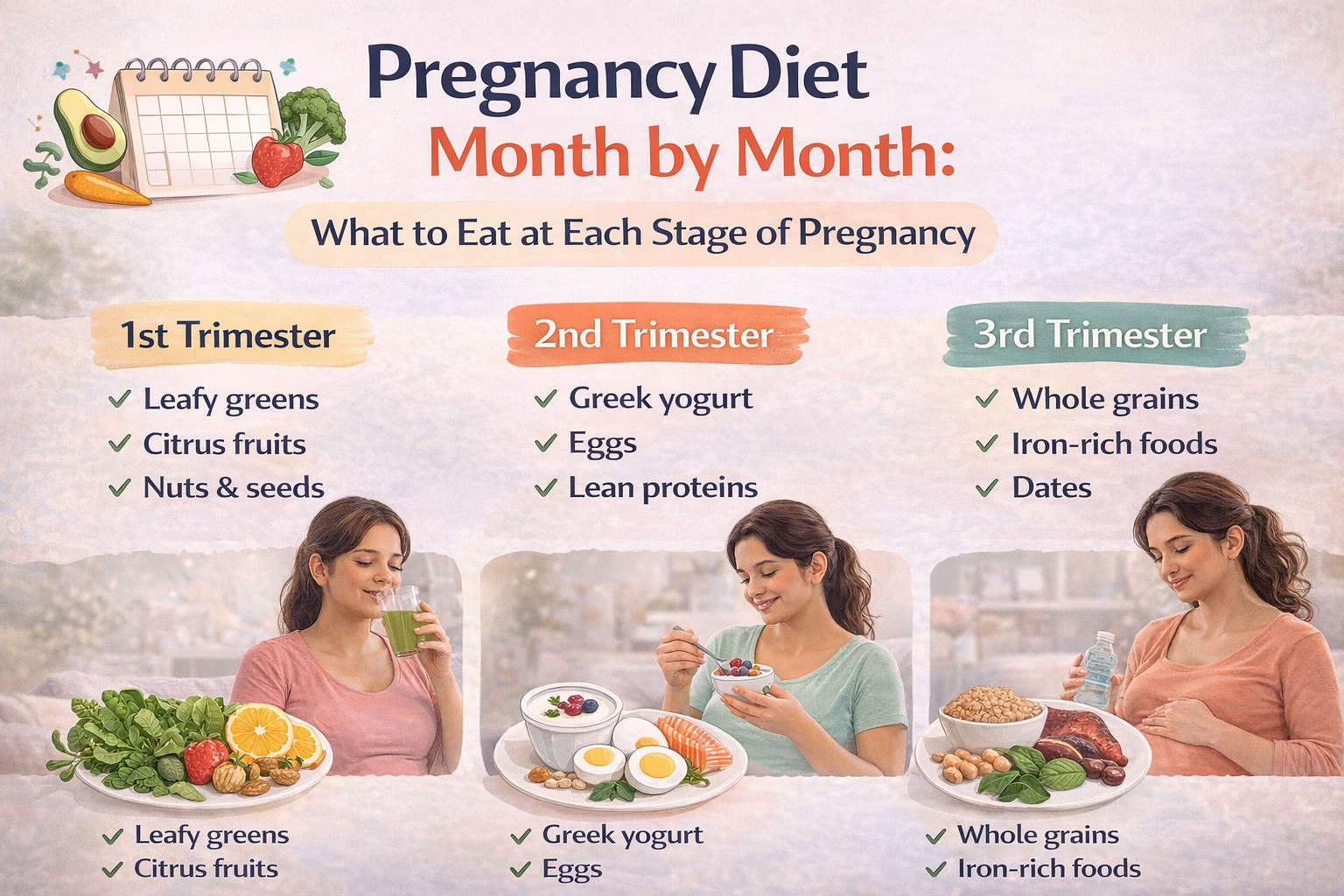
Pregnancy Diet Month by Month: What to Eat at Each Stage of PregnancyNutrition during pregnancy is one of the most direct ways you can support your baby's development — from the very first days of conception through to birth. What you eat provides the raw materials your baby uses to build every organ, every bone, every brain cell. And yet pregnancy nutrition is surrounded by more conflicting advice, cultural myths and marketing messages than almost any other aspect of pregnancy.This guide cuts through the noise with clear, evidence-based guidance on what to prioritise at each stage of pregnancy, with specific focus on nutrients that matter for Indian women. Before Pregnancy: The FoundationIf you are planning to become pregnant, starting folic acid supplementation at least three months before conception significantly reduces the risk of neural tube defects. The recommended dose is 400 to 800 micrograms per day for most women, though women with certain risk factors (previous neural tube defect pregnancy, diabetes, certain medications) need higher doses. Speak to your doctor before conception if possible. First Trimester (Months 1–3): Building the FoundationMost Critical NutrientsFolic acid remains the most critical nutrient in the first trimester. It is essential for neural tube formation, which is complete by the end of week six — often before a woman even knows she is pregnant. If you are not already taking it, start immediately.Iron is needed from early pregnancy to support the significant increase in blood volume that begins in the first trimester. Indian women are at high risk of iron deficiency due to dietary patterns and high rates of pre-existing anaemia.Iodine is essential for fetal thyroid development and brain development. Iodine deficiency is common in India, particularly in areas far from the coast. Iodised salt and dairy products are the main dietary sources. 🛒 RECOMMENDED PRODUCTPrenatal Multivitamin Folic Acid IndiaA high-quality prenatal vitamin covering folic acid, iron and iodine is essential from the moment you know you are pregnant. Search for a prenatal multivitamin on Amazon — paste your affiliate link here.🔗 Amazon Link: Prenatal Multivitamin Folic Acid Managing First Trimester ChallengesFor most women, the first trimester is the hardest nutritionally because nausea and food aversions can make eating difficult. The priority in this trimester is not perfect nutrition — it is eating whatever you can tolerate. A prenatal vitamin covers your nutritional bases while you navigate the difficult period.Focus on: bland, easy-to-digest foods, small frequent meals, cold foods if hot food triggers nausea, and staying hydrated even if eating is difficult. Second Trimester (Months 4–6): Growth and DevelopmentThe second trimester is typically when nausea improves and appetite returns. This is the best time to focus on building excellent nutritional habits that will support the accelerated growth of the second and third trimesters.Calcium and Vitamin DYour baby's skeleton is mineralising rapidly in the second trimester. Calcium requirements increase significantly — aim for three to four servings of dairy or calcium-rich alternatives daily. Vitamin D is essential for calcium absorption and is very commonly deficient in Indian women due to limited sun exposure and skin pigmentation. Ask your doctor to check your vitamin D levels and supplement if needed.ProteinProtein requirements increase by approximately 25 grams per day during pregnancy compared to non-pregnancy. Good Indian protein sources include dals and legumes, paneer, curd, eggs, fish (choose low-mercury options), and chicken. Aim for a source of protein at every meal.DHA and Omega-3 Fatty AcidsDHA is the primary structural fat of the brain and retina. The fetal brain grows dramatically in the second and third trimesters, and adequate DHA is associated with better cognitive outcomes. The main dietary source is fatty fish — aim for two to three servings per week of low-mercury fish (salmon, sardines, tilapia). If fish consumption is low, a DHA supplement is worth considering. 🛒 RECOMMENDED PRODUCTDHA Omega 3 Pregnancy Supplement IndiaDHA supplementation during pregnancy supports fetal brain development. Search for a DHA omega-3 supplement for pregnancy on Amazon — paste your affiliate link here.🔗 Amazon Link:DHA Omega 3 Pregnancy Supplement India Third Trimester (Months 7–9): Preparing for BirthCaloric requirements increase most in the third trimester — approximately 400 to 500 additional calories per day compared to pre-pregnancy. But the quality of those additional calories matters as much as the quantity.Iron and HaemoglobinIron deficiency anaemia is very common in the third trimester as blood volume reaches its peak. Symptoms include fatigue, pallor, breathlessness and dizziness. Vitamin C significantly enhances iron absorption — take iron-rich foods with a source of vitamin C (lemon juice, tomatoes, amla). Avoid tea and coffee with iron-rich meals as they inhibit absorption.Foods to Prioritise in the Third Trimester• Green leafy vegetables — particularly spinach, methi and drumstick leaves for iron and folate• Whole grains — for sustained energy and B vitamins• Nuts and seeds — for healthy fats, protein and magnesium• Curd and dairy — for calcium, protein and probiotics• Dates — emerging research suggests consuming dates in the last four weeks may support cervical ripening and reduce labour duration 🛒 RECOMMENDED PRODUCTIndian Pregnancy Cookbook RecipesA pregnancy cookbook written for Indian diets makes trimester-specific meal planning significantly easier. Search for an Indian pregnancy diet cookbook on Amazon — paste your affiliate link here.🔗 Amazon Link: Indian Pregnancy Cookbook Recipes What to Avoid Throughout Pregnancy• Raw or undercooked meat, eggs and fish — risk of listeria, salmonella and toxoplasma• High-mercury fish — shark, swordfish, king mackerel, tilefish• Unpasteurised dairy and cheese — risk of listeria• Alcohol — no safe level has been established in pregnancy• Excess caffeine — limit to under 200mg per day (approximately two cups of filter coffee)• Raw sprouts — high bacterial contamination risk For trusted obstetricians, prenatal nutritionists and maternity services near you, visit firstchoiceclub.in — India's global directory for pregnancy and newborn services.
22 Mar
View Details
Pregnancy Diet Month by Month: What to Eat at Each Stage of PregnancyNutrition during pregnancy is one of the most direct ways you can support your baby's development — from the very first days of conception through to birth. What you eat provides the raw materials your baby uses to build every organ, every bone, every brain cell. And yet pregnancy nutrition is surrounded by more conflicting advice, cultural myths and marketing messages than almost any other aspect of pregnancy.This guide cuts through the noise with clear, evidence-based guidance on what to prioritise at each stage of pregnancy, with specific focus on nutrients that matter for Indian women. Before Pregnancy: The FoundationIf you are planning to become pregnant, starting folic acid supplementation at least three months before conception significantly reduces the risk of neural tube defects. The recommended dose is 400 to 800 micrograms per day for most women, though women with certain risk factors (previous neural tube defect pregnancy, diabetes, certain medications) need higher doses. Speak to your doctor before conception if possible. First Trimester (Months 1–3): Building the FoundationMost Critical NutrientsFolic acid remains the most critical nutrient in the first trimester. It is essential for neural tube formation, which is complete by the end of week six — often before a woman even knows she is pregnant. If you are not already taking it, start immediately.Iron is needed from early pregnancy to support the significant increase in blood volume that begins in the first trimester. Indian women are at high risk of iron deficiency due to dietary patterns and high rates of pre-existing anaemia.Iodine is essential for fetal thyroid development and brain development. Iodine deficiency is common in India, particularly in areas far from the coast. Iodised salt and dairy products are the main dietary sources. 🛒 RECOMMENDED PRODUCTPrenatal Multivitamin Folic Acid IndiaA high-quality prenatal vitamin covering folic acid, iron and iodine is essential from the moment you know you are pregnant. Search for a prenatal multivitamin on Amazon — paste your affiliate link here.🔗 Amazon Link: Prenatal Multivitamin Folic Acid Managing First Trimester ChallengesFor most women, the first trimester is the hardest nutritionally because nausea and food aversions can make eating difficult. The priority in this trimester is not perfect nutrition — it is eating whatever you can tolerate. A prenatal vitamin covers your nutritional bases while you navigate the difficult period.Focus on: bland, easy-to-digest foods, small frequent meals, cold foods if hot food triggers nausea, and staying hydrated even if eating is difficult. Second Trimester (Months 4–6): Growth and DevelopmentThe second trimester is typically when nausea improves and appetite returns. This is the best time to focus on building excellent nutritional habits that will support the accelerated growth of the second and third trimesters.Calcium and Vitamin DYour baby's skeleton is mineralising rapidly in the second trimester. Calcium requirements increase significantly — aim for three to four servings of dairy or calcium-rich alternatives daily. Vitamin D is essential for calcium absorption and is very commonly deficient in Indian women due to limited sun exposure and skin pigmentation. Ask your doctor to check your vitamin D levels and supplement if needed.ProteinProtein requirements increase by approximately 25 grams per day during pregnancy compared to non-pregnancy. Good Indian protein sources include dals and legumes, paneer, curd, eggs, fish (choose low-mercury options), and chicken. Aim for a source of protein at every meal.DHA and Omega-3 Fatty AcidsDHA is the primary structural fat of the brain and retina. The fetal brain grows dramatically in the second and third trimesters, and adequate DHA is associated with better cognitive outcomes. The main dietary source is fatty fish — aim for two to three servings per week of low-mercury fish (salmon, sardines, tilapia). If fish consumption is low, a DHA supplement is worth considering. 🛒 RECOMMENDED PRODUCTDHA Omega 3 Pregnancy Supplement IndiaDHA supplementation during pregnancy supports fetal brain development. Search for a DHA omega-3 supplement for pregnancy on Amazon — paste your affiliate link here.🔗 Amazon Link:DHA Omega 3 Pregnancy Supplement India Third Trimester (Months 7–9): Preparing for BirthCaloric requirements increase most in the third trimester — approximately 400 to 500 additional calories per day compared to pre-pregnancy. But the quality of those additional calories matters as much as the quantity.Iron and HaemoglobinIron deficiency anaemia is very common in the third trimester as blood volume reaches its peak. Symptoms include fatigue, pallor, breathlessness and dizziness. Vitamin C significantly enhances iron absorption — take iron-rich foods with a source of vitamin C (lemon juice, tomatoes, amla). Avoid tea and coffee with iron-rich meals as they inhibit absorption.Foods to Prioritise in the Third Trimester• Green leafy vegetables — particularly spinach, methi and drumstick leaves for iron and folate• Whole grains — for sustained energy and B vitamins• Nuts and seeds — for healthy fats, protein and magnesium• Curd and dairy — for calcium, protein and probiotics• Dates — emerging research suggests consuming dates in the last four weeks may support cervical ripening and reduce labour duration 🛒 RECOMMENDED PRODUCTIndian Pregnancy Cookbook RecipesA pregnancy cookbook written for Indian diets makes trimester-specific meal planning significantly easier. Search for an Indian pregnancy diet cookbook on Amazon — paste your affiliate link here.🔗 Amazon Link: Indian Pregnancy Cookbook Recipes What to Avoid Throughout Pregnancy• Raw or undercooked meat, eggs and fish — risk of listeria, salmonella and toxoplasma• High-mercury fish — shark, swordfish, king mackerel, tilefish• Unpasteurised dairy and cheese — risk of listeria• Alcohol — no safe level has been established in pregnancy• Excess caffeine — limit to under 200mg per day (approximately two cups of filter coffee)• Raw sprouts — high bacterial contamination risk For trusted obstetricians, prenatal nutritionists and maternity services near you, visit firstchoiceclub.in — India's global directory for pregnancy and newborn services.
22 Mar
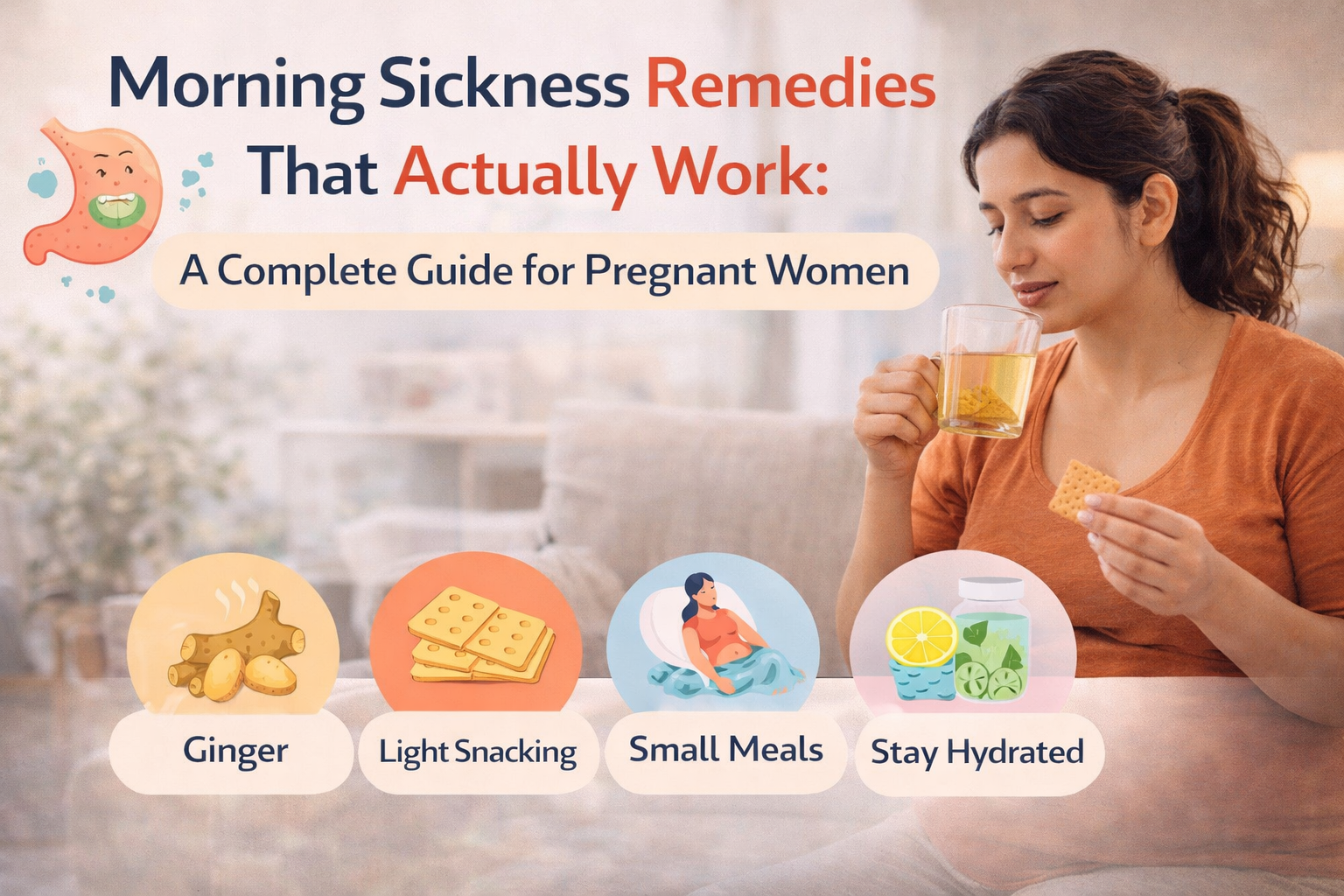
Morning Sickness Remedies That Actually Work: A Complete Guide for Pregnant WomenMorning sickness is a misleading name for a condition that, for many women, lasts all day and well into the evening. It affects approximately 70 to 80 percent of pregnant women, typically beginning around six weeks and peaking at eight to ten weeks. For most women it resolves by fourteen weeks, though for some it persists throughout pregnancy.This guide covers every evidence-based remedy for pregnancy nausea, from dietary adjustments and natural approaches to when medical treatment is appropriate. What Causes Morning Sickness?The exact cause of morning sickness is not fully understood, but it is strongly linked to rising levels of human chorionic gonadotropin (hCG) — the pregnancy hormone that begins to rise sharply in early pregnancy. Morning sickness tends to peak when hCG levels are highest, which is consistent with this theory.There is also an evolutionary hypothesis that morning sickness protects the developing embryo during the critical first trimester by causing the mother to avoid foods that might contain harmful substances. This may explain why many women develop aversions to alcohol, coffee, meat and strong-smelling foods — all of which can carry risk in early pregnancy. Dietary StrategiesEat Small, Frequent MealsAn empty stomach worsens nausea — stomach acid with nothing to work on is particularly irritating. Eating small amounts every one to two hours keeps the stomach from becoming empty. Keep dry crackers, plain biscuits or dry toast beside your bed to eat before getting up in the morning.Cold Foods Over HotHot foods release more aroma than cold foods, and strong smells are one of the most reliable nausea triggers in pregnancy. Cold or room-temperature foods — chilled fruit, cold rice, yoghurt — are often better tolerated than cooked hot meals.Separate Fluids and SolidsDrinking large amounts of fluid at mealtimes can worsen nausea. Try drinking fluids between meals rather than with food, in small sips throughout the day rather than large amounts at once.Protein at NightEating a small protein-rich snack before bed — a handful of nuts, a small portion of curd, a boiled egg — helps stabilise blood sugar overnight and can reduce morning nausea. Low blood sugar is a significant nausea trigger. Natural Remedies with EvidenceGingerGinger is the most extensively researched natural remedy for pregnancy nausea and has genuine evidence for efficacy. Multiple randomised controlled trials have found ginger to be significantly more effective than placebo for reducing nausea severity. It can be taken as ginger tea, fresh ginger in warm water with honey and lemon, ginger biscuits, or ginger supplements. 🛒 RECOMMENDED PRODUCTMorning Sickness Ginger Drops PregnancyPregnancy-safe ginger drops are a convenient on-the-go nausea relief option for Indian mothers. Search for morning sickness relief drops on Amazon — paste your affiliate link here.🔗 Amazon Link: Morning Sickness Ginger Drops Pregnancy Acupressure WristbandsAcupressure wristbands apply constant pressure to the P6 (Neiguan) point on the inner wrist, which has been used in traditional Chinese medicine for millennia to treat nausea. Multiple clinical trials have found P6 stimulation to be more effective than placebo for pregnancy nausea, with no side effects. 🛒 RECOMMENDED PRODUCTSea Band Morning Sickness WristbandThe Sea-Band Mama Wristband is drug-free, reusable and clinically tested for pregnancy nausea. Safe throughout pregnancy. Paste your Amazon affiliate link here.🔗 Amazon Link: Sea Band Morning Sickness Wristband Vitamin B6Vitamin B6 (pyridoxine) at doses of 10 to 25mg three times daily has reasonable evidence for reducing pregnancy nausea and is generally considered safe. It is one of the first-line pharmacological recommendations from most obstetric guidelines when dietary and natural approaches are insufficient. It is available over the counter in India.When to See Your DoctorSeek medical attention if you are unable to keep any food or fluids down for 24 hours, if you are losing weight, if your urine is very dark or you have not passed urine in eight hours, or if you feel faint or dizzy. These are signs of hyperemesis gravidarum — a severe form of pregnancy sickness that requires medical treatment including intravenous fluids.Effective prescription anti-nausea medication is available and safe in pregnancy — you do not need to suffer through severe nausea without help. For trusted obstetricians and maternity services, visit firstchoiceclub.in.
22 Mar
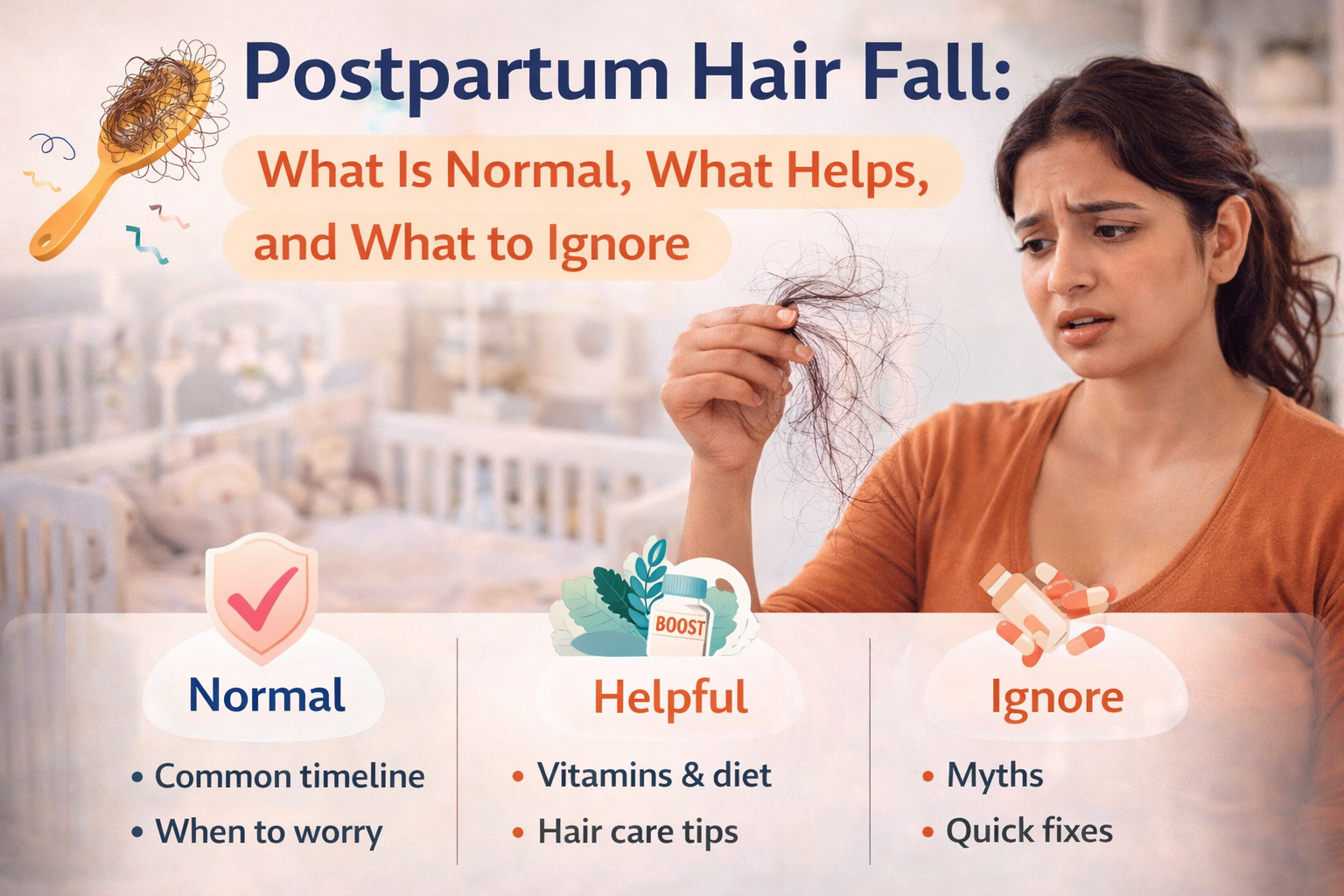
Postpartum Hair Fall: What Is Normal, What Helps, and What to IgnoreApproximately three to four months after giving birth, many new mothers notice a startling increase in hair shedding. Handfuls of hair in the shower, clumps on the pillow, hair everywhere. It can be alarming — particularly when you are already exhausted and stretched thin. But in the vast majority of cases, postpartum hair fall is a completely normal physiological process with a predictable timeline. Why Postpartum Hair Fall HappensDuring pregnancy, elevated oestrogen levels prolong the active growing phase of the hair cycle (anagen phase), keeping hairs in the growing phase longer than normal. This is why many women notice that their hair becomes thicker and more lustrous during pregnancy — they are simply losing less hair than usual.After birth, when oestrogen levels drop sharply, all those hairs that were held in the growing phase simultaneously enter the shedding phase (telogen phase). This is called telogen effluvium, and it typically peaks at three to four months postpartum.What Is NormalNormally, we shed approximately 50 to 100 hairs per day. During postpartum telogen effluvium, it can feel like much more than this. The shedding typically begins around three months after birth, peaks around four months, and resolves by six to twelve months postpartum. In most women, hair density returns to its pre-pregnancy level — or close to it — within twelve to eighteen months.What Actually HelpsNutritionIron deficiency is one of the most common causes of hair fall in postpartum women, and it is frequently underdiagnosed. Get your ferritin (stored iron) levels checked — not just haemoglobin. A ferritin level below 70 mcg/L is associated with significant hair fall, even when haemoglobin is normal. Iron supplementation, if indicated, can make a significant difference to hair recovery.Other nutritional factors that support hair recovery include adequate protein intake, vitamin D (very commonly deficient in Indian women), biotin, and zinc. 🛒 RECOMMENDED PRODUCTBiotin Tablets Hair Fall PostpartumBiotin supplements are commonly recommended for postpartum hair recovery. Always consult your doctor before starting any supplement while breastfeeding. Paste your Amazon affiliate link here.🔗 Amazon Link:Biotin Tablets Hair Fall Postpartum Gentle Hair CareDuring the postpartum shedding period, minimising additional hair stress helps retain the hairs that are not already in the shedding phase. Use a wide-tooth comb rather than a brush, particularly on wet hair. Avoid tight hairstyles that pull on the scalp. Reduce heat styling. Switch to a gentle, sulphate-free shampoo. 🛒 RECOMMENDED PRODUCTSulphate Free Shampoo Hair Fall IndiaSwitching to a sulphate-free, gentle shampoo reduces additional stress on already fragile postpartum hair. Search for a hair fall control shampoo on Amazon — paste your affiliate link here.🔗 Amazon Link: Sulphate Free Shampoo Hair Fall India Scalp MassageRegular scalp massage increases blood flow to the hair follicles and has some evidence for stimulating hair growth. Five minutes of gentle circular massage with fingertips daily can be done with or without oil. Rosemary oil has emerging research evidence as a topical treatment for hair loss — mix a few drops with a carrier oil and massage into the scalp.What Does Not HelpExpensive shampoos marketed specifically for postpartum hair loss are not supported by evidence and are generally a waste of money. Special hair supplements beyond addressing specific deficiencies (iron, vitamin D, biotin) have limited evidence. Stress reduction, while beneficial for general health, does not directly treat telogen effluvium.When to See a DoctorSee a doctor if your hair loss is severe (you can see the scalp clearly), if it has not improved at all by twelve months postpartum, if it is accompanied by other symptoms such as fatigue, weight gain or cold intolerance (which can indicate thyroid problems), or if the hair loss pattern is unusual (patchy or at the hairline rather than diffuse). For healthcare professionals in your area, visit firstchoiceclub.in.
22 Mar
Connecting parents with trusted baby services, from healthcare to baby products.

Use the search bar to find local providers.

View detailed listings with ratings, reviews, & contact info

Direct links to service providers or booking options.

Help other parents by leaving feedback on the service.
Trusted by thousands of parents. Here's what they have to say.
Reach new customers and grow your business by joining FirstChoiceClub.
Get Your Business Listed Today

.png)

.png)

.png)
 (1).png)
.png)
.png)
.png)
 (1).png)
 (1).png)
.png)


.png)

.png)
.png)
.png)
.png)
.png)
 (1).png)

.png)
.png)
.png)
.png)

.png)
.png)

 (1).png)

.png)
.png)

.png)
.png)
.png)