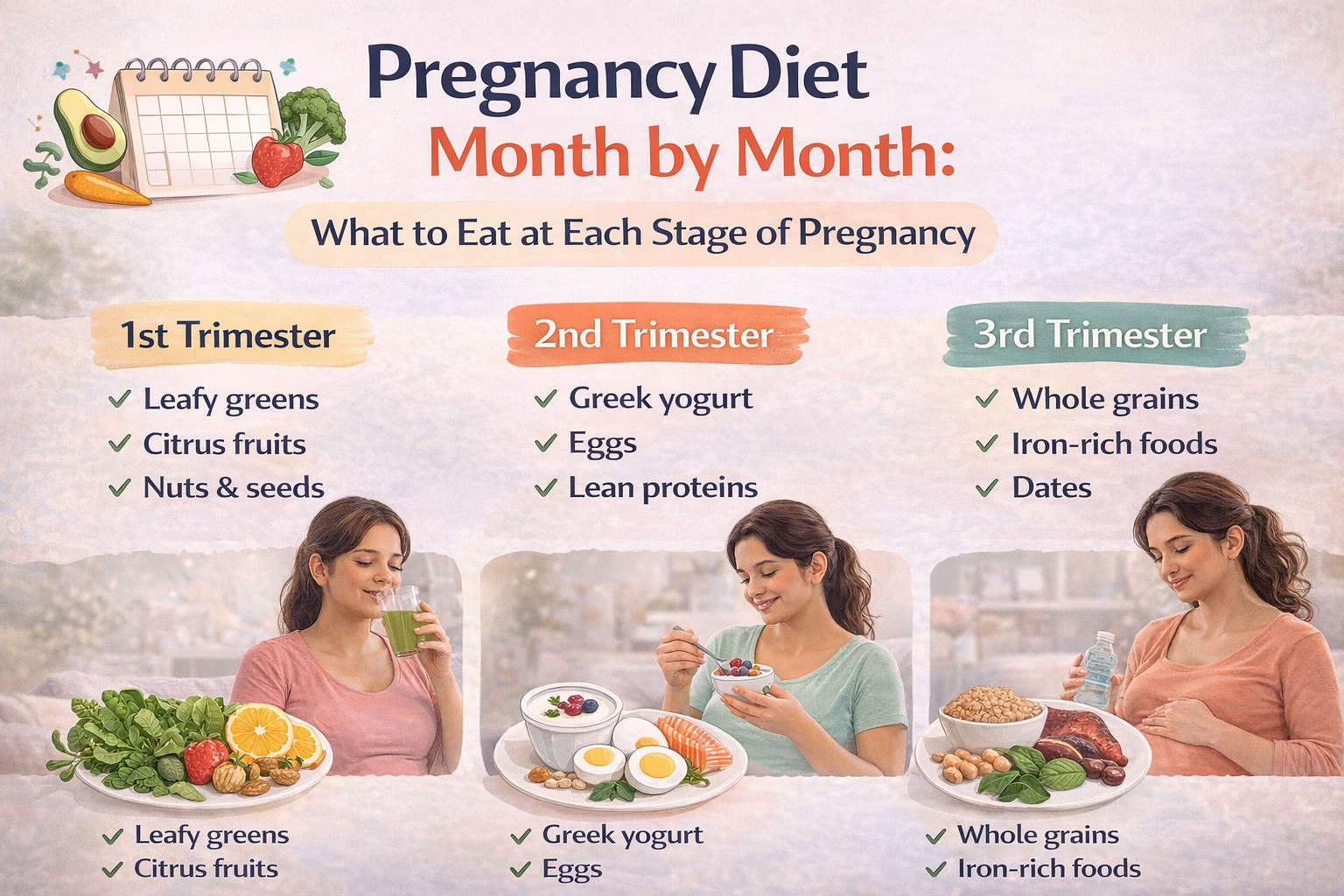
Pregnancy Diet Month by Month: What to Eat at Each Stage of Pregnancy
Nutrition during pregnancy is one of the most direct ways you can support your baby's development — from the very first days of conception through to birth. What you eat provides the raw materials your baby uses to build every organ, every bone, every brain cell. And yet pregnancy nutrition is surrounded by more conflicting advice, cultural myths and marketing messages than almost any other aspect of pregnancy.
This guide cuts through the noise with clear, evidence-based guidance on what to prioritise at each stage of pregnancy, with specific focus on nutrients that matter for Indian women.
Before Pregnancy: The Foundation
If you are planning to become pregnant, starting folic acid supplementation at least three months before conception significantly reduces the risk of neural tube defects. The recommended dose is 400 to 800 micrograms per day for most women, though women with certain risk factors (previous neural tube defect pregnancy, diabetes, certain medications) need higher doses. Speak to your doctor before conception if possible.
First Trimester (Months 1–3): Building the Foundation
Most Critical Nutrients
Folic acid remains the most critical nutrient in the first trimester. It is essential for neural tube formation, which is complete by the end of week six — often before a woman even knows she is pregnant. If you are not already taking it, start immediately.
Iron is needed from early pregnancy to support the significant increase in blood volume that begins in the first trimester. Indian women are at high risk of iron deficiency due to dietary patterns and high rates of pre-existing anaemia.
Iodine is essential for fetal thyroid development and brain development. Iodine deficiency is common in India, particularly in areas far from the coast. Iodised salt and dairy products are the main dietary sources.
🛒 RECOMMENDED PRODUCT Prenatal Multivitamin Folic Acid India A high-quality prenatal vitamin covering folic acid, iron and iodine is essential from the moment you know you are pregnant. Search for a prenatal multivitamin on Amazon — paste your affiliate link here. 🔗 Amazon Link: Prenatal Multivitamin Folic Acid |
Managing First Trimester Challenges
For most women, the first trimester is the hardest nutritionally because nausea and food aversions can make eating difficult. The priority in this trimester is not perfect nutrition — it is eating whatever you can tolerate. A prenatal vitamin covers your nutritional bases while you navigate the difficult period.
Focus on: bland, easy-to-digest foods, small frequent meals, cold foods if hot food triggers nausea, and staying hydrated even if eating is difficult.
Second Trimester (Months 4–6): Growth and Development
The second trimester is typically when nausea improves and appetite returns. This is the best time to focus on building excellent nutritional habits that will support the accelerated growth of the second and third trimesters.
Calcium and Vitamin D
Your baby's skeleton is mineralising rapidly in the second trimester. Calcium requirements increase significantly — aim for three to four servings of dairy or calcium-rich alternatives daily. Vitamin D is essential for calcium absorption and is very commonly deficient in Indian women due to limited sun exposure and skin pigmentation. Ask your doctor to check your vitamin D levels and supplement if needed.
Protein
Protein requirements increase by approximately 25 grams per day during pregnancy compared to non-pregnancy. Good Indian protein sources include dals and legumes, paneer, curd, eggs, fish (choose low-mercury options), and chicken. Aim for a source of protein at every meal.
DHA and Omega-3 Fatty Acids
DHA is the primary structural fat of the brain and retina. The fetal brain grows dramatically in the second and third trimesters, and adequate DHA is associated with better cognitive outcomes. The main dietary source is fatty fish — aim for two to three servings per week of low-mercury fish (salmon, sardines, tilapia). If fish consumption is low, a DHA supplement is worth considering.
🛒 RECOMMENDED PRODUCT DHA Omega 3 Pregnancy Supplement India DHA supplementation during pregnancy supports fetal brain development. Search for a DHA omega-3 supplement for pregnancy on Amazon — paste your affiliate link here. 🔗 Amazon Link:DHA Omega 3 Pregnancy Supplement India |
Third Trimester (Months 7–9): Preparing for Birth
Caloric requirements increase most in the third trimester — approximately 400 to 500 additional calories per day compared to pre-pregnancy. But the quality of those additional calories matters as much as the quantity.
Iron and Haemoglobin
Iron deficiency anaemia is very common in the third trimester as blood volume reaches its peak. Symptoms include fatigue, pallor, breathlessness and dizziness. Vitamin C significantly enhances iron absorption — take iron-rich foods with a source of vitamin C (lemon juice, tomatoes, amla). Avoid tea and coffee with iron-rich meals as they inhibit absorption.
Foods to Prioritise in the Third Trimester
• Green leafy vegetables — particularly spinach, methi and drumstick leaves for iron and folate
• Whole grains — for sustained energy and B vitamins
• Nuts and seeds — for healthy fats, protein and magnesium
• Curd and dairy — for calcium, protein and probiotics
• Dates — emerging research suggests consuming dates in the last four weeks may support cervical ripening and reduce labour duration
🛒 RECOMMENDED PRODUCT Indian Pregnancy Cookbook Recipes A pregnancy cookbook written for Indian diets makes trimester-specific meal planning significantly easier. Search for an Indian pregnancy diet cookbook on Amazon — paste your affiliate link here. 🔗 Amazon Link: Indian Pregnancy Cookbook Recipes |
What to Avoid Throughout Pregnancy
• Raw or undercooked meat, eggs and fish — risk of listeria, salmonella and toxoplasma
• High-mercury fish — shark, swordfish, king mackerel, tilefish
• Unpasteurised dairy and cheese — risk of listeria
• Alcohol — no safe level has been established in pregnancy
• Excess caffeine — limit to under 200mg per day (approximately two cups of filter coffee)
• Raw sprouts — high bacterial contamination risk
For trusted obstetricians, prenatal nutritionists and maternity services near you, visit firstchoiceclub.in — India's global directory for pregnancy and newborn services.
22 Mar