Postpartum Hair Fall: What Is Normal, What Helps, and What to Ignore
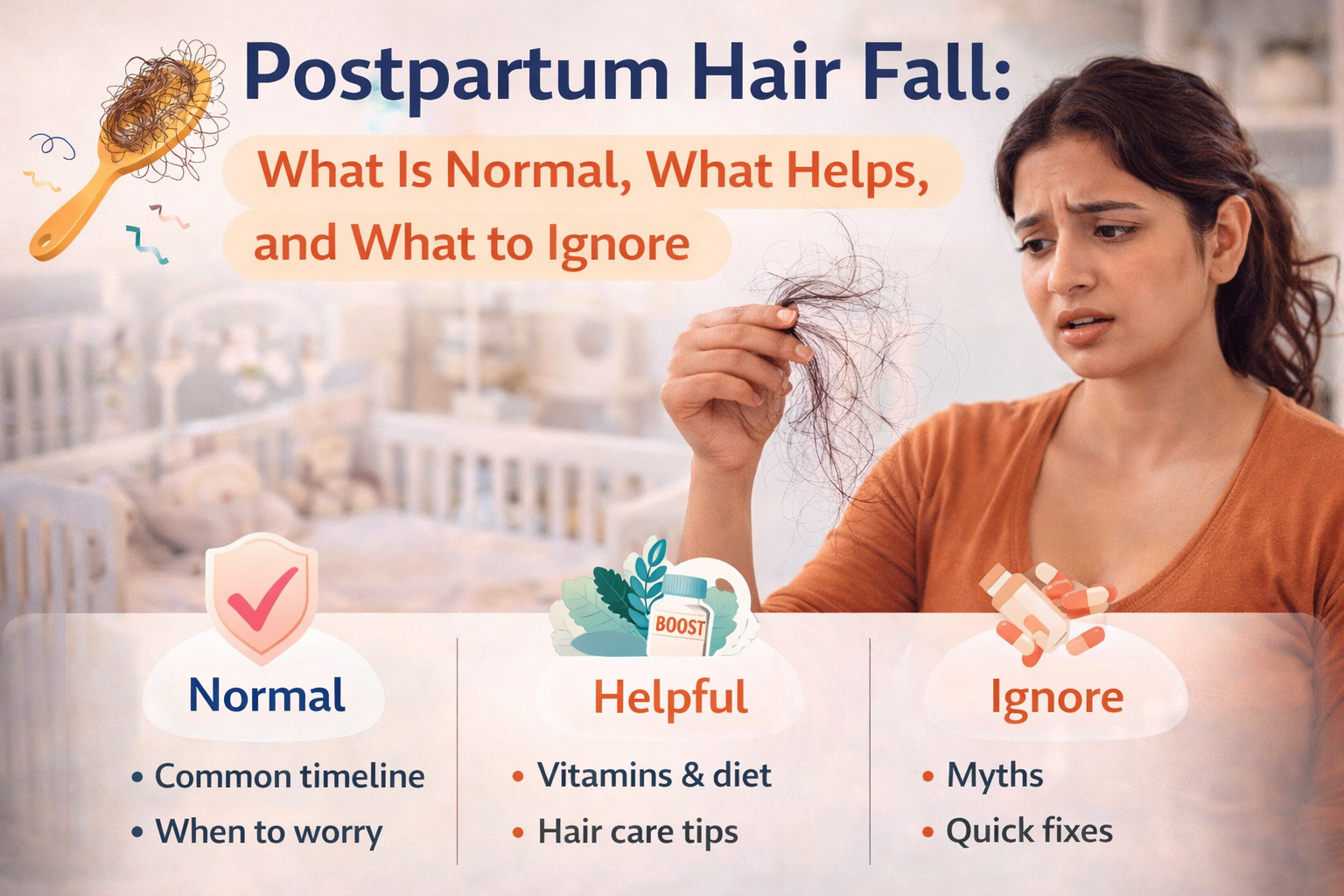
Approximately three to four months after giving birth, many new mothers notice a startling increase in hair shedding. Handfuls of hair in the shower, clumps on the pillow, hair everywhere. It can be alarming — particularly when you are already exhausted and stretched thin. But in the vast majority of cases, postpartum hair fall is a completely normal physiological process with a predictable timeline.
Why Postpartum Hair Fall Happens
During pregnancy, elevated oestrogen levels prolong the active growing phase of the hair cycle (anagen phase), keeping hairs in the growing phase longer than normal. This is why many women notice that their hair becomes thicker and more lustrous during pregnancy — they are simply losing less hair than usual.
After birth, when oestrogen levels drop sharply, all those hairs that were held in the growing phase simultaneously enter the shedding phase (telogen phase). This is called telogen effluvium, and it typically peaks at three to four months postpartum.
What Is Normal
Normally, we shed approximately 50 to 100 hairs per day. During postpartum telogen effluvium, it can feel like much more than this. The shedding typically begins around three months after birth, peaks around four months, and resolves by six to twelve months postpartum. In most women, hair density returns to its pre-pregnancy level — or close to it — within twelve to eighteen months.
What Actually Helps
Nutrition
Iron deficiency is one of the most common causes of hair fall in postpartum women, and it is frequently underdiagnosed. Get your ferritin (stored iron) levels checked — not just haemoglobin. A ferritin level below 70 mcg/L is associated with significant hair fall, even when haemoglobin is normal. Iron supplementation, if indicated, can make a significant difference to hair recovery.
Other nutritional factors that support hair recovery include adequate protein intake, vitamin D (very commonly deficient in Indian women), biotin, and zinc.
🛒 RECOMMENDED PRODUCT Biotin Tablets Hair Fall Postpartum Biotin supplements are commonly recommended for postpartum hair recovery. Always consult your doctor before starting any supplement while breastfeeding. Paste your Amazon affiliate link here. 🔗 Amazon Link:Biotin Tablets Hair Fall Postpartum |
Gentle Hair Care
During the postpartum shedding period, minimising additional hair stress helps retain the hairs that are not already in the shedding phase. Use a wide-tooth comb rather than a brush, particularly on wet hair. Avoid tight hairstyles that pull on the scalp. Reduce heat styling. Switch to a gentle, sulphate-free shampoo.
🛒 RECOMMENDED PRODUCT Sulphate Free Shampoo Hair Fall India Switching to a sulphate-free, gentle shampoo reduces additional stress on already fragile postpartum hair. Search for a hair fall control shampoo on Amazon — paste your affiliate link here. 🔗 Amazon Link: Sulphate Free Shampoo Hair Fall India |
Scalp Massage
Regular scalp massage increases blood flow to the hair follicles and has some evidence for stimulating hair growth. Five minutes of gentle circular massage with fingertips daily can be done with or without oil. Rosemary oil has emerging research evidence as a topical treatment for hair loss — mix a few drops with a carrier oil and massage into the scalp.
What Does Not Help
Expensive shampoos marketed specifically for postpartum hair loss are not supported by evidence and are generally a waste of money. Special hair supplements beyond addressing specific deficiencies (iron, vitamin D, biotin) have limited evidence. Stress reduction, while beneficial for general health, does not directly treat telogen effluvium.
When to See a Doctor
See a doctor if your hair loss is severe (you can see the scalp clearly), if it has not improved at all by twelve months postpartum, if it is accompanied by other symptoms such as fatigue, weight gain or cold intolerance (which can indicate thyroid problems), or if the hair loss pattern is unusual (patchy or at the hairline rather than diffuse). For healthcare professionals in your area, visit firstchoiceclub.in.
22 Mar