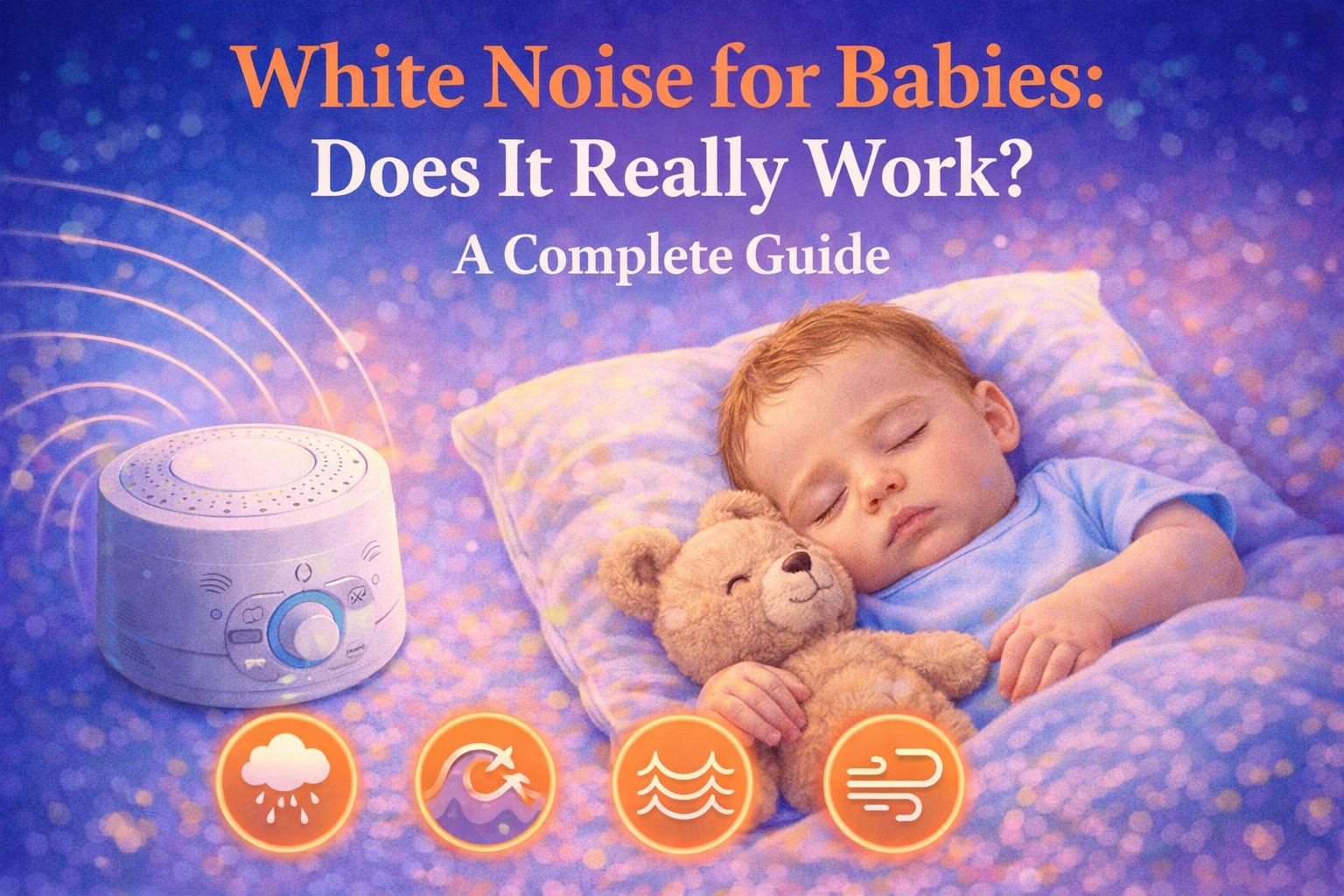
White Noise for Babies: Does It Really Work? A Complete Guide
If you have ever turned on a fan, a running tap, or a dedicated white noise machine to help a restless newborn fall asleep, you are in very good company. White noise has become one of the most widely recommended sleep tools for infants, endorsed by pediatricians, sleep consultants, and millions of parents who swear it transformed their nights. But how does it actually work, is it safe, and does every baby respond to it the same way?
What Exactly Is White Noise?
White noise is a consistent, steady sound that contains all audible frequencies played at equal intensity — like the constant hiss of an untuned television, the rush of a shower, or the drone of an air conditioner. Because it contains all frequencies simultaneously, it effectively masks other sounds that might startle a sleeping baby awake.
The term is also used loosely to include pink noise (which emphasises lower frequencies and sounds like steady rain or ocean waves) and brown noise (even deeper, like a strong waterfall). Research suggests pink noise may be particularly effective at promoting deep sleep.
Why Does White Noise Help Babies Sleep?
The most compelling explanation comes from the womb. For nine months, your baby existed in an environment that was far from quiet. The constant whooshing of blood flowing through the placenta, muffled outside sounds, and your heartbeat created a consistent soundscape of approximately 70 to 80 decibels — roughly the volume of a vacuum cleaner in the next room.
Birth is, among other things, a transition from continuous noise to a world where silence is interrupted by sudden, unpredictable sounds. For many newborns, this is genuinely disorienting. A consistent white noise source bridges that transition, providing the steady auditory backdrop the baby was accustomed to in the womb.
What Does the Research Say?
The research on white noise and infant sleep is genuinely encouraging. Studies in neonatal intensive care units have found that white noise reduces stress indicators in premature infants and improves sleep quality. Research also suggests white noise can be helpful for babies with colic, with studies showing reduced crying duration when colicky infants are exposed to consistent sound.
How to Use White Noise Safely
Volume is the most critical consideration. Keep the white noise at or below 50 decibels — roughly the level of a quiet conversation. Download a free sound meter app on your phone to check the level at your baby's ear. Place the white noise source at least 1.5 to 2 metres away from your baby's crib. Never place a speaker inside the cot.
Choose steady, flat sounds rather than music with varying dynamics. A consistent soundscape is more effective because sudden increases in volume can trigger the startle reflex.
🛒 RECOMMENDED PRODUCT Dreamegg White Noise Machine The Dreamegg White Noise Machine offers 29 non-looping sounds, a built-in night light, and stays well within the safe 50 decibel limit. One of the most popular options for Indian parents — paste your Amazon affiliate link here. 🔗 Amazon Link:Dreamegg White Noise Machine |
Best Types of White Noise for Babies
A dedicated white noise machine is the safest and most convenient option as it is designed specifically to stay within safe volume limits. A running fan placed at a safe distance also provides effective white noise and helps regulate room temperature. Many parents successfully use free apps on a phone placed across the room.
For babies who do not respond to classic white noise, try pink or brown noise, rain sounds, or ocean waves. These lower-frequency options work better for some babies and are generally easier for parents to sleep through as well.
🛒 RECOMMENDED PRODUCT Baby Sound Sleep Machine A portable baby sound machine lets you bring familiar sleep sounds anywhere. Search for a portable baby sleep soother on Amazon — paste your affiliate link here. 🔗 Amazon Link:Baby Sound Sleep Machine |
Does Every Baby Respond to White Noise?
No — and it is important to say this clearly. Most babies respond positively to white noise, particularly in the newborn period. However, some babies show no particular response, and a small number seem more alert with background noise rather than calmer. If your baby does not settle with white noise after a consistent week of use, it may simply not be the right tool for your particular child. Every baby is different.
For trusted newborn care services and pediatricians who can advise on infant sleep, visit firstchoiceclub.in — India's global directory for pregnancy and baby services.
21 Mar