The Complete Newborn Vaccination Schedule India 2026: What Every Parent Needs to Know
Vaccination is one of the single most effective things you can do to protect your baby's health. Vaccines have eliminated smallpox, dramatically reduced polio, and prevented millions of deaths from diseases like measles, diphtheria and whooping cough. Yet for many new parents, the vaccination schedule can feel overwhelming — a long list of unfamiliar names, multiple injections at each visit, and uncertainty about what to expect.
This guide gives you the complete Indian Academy of Pediatrics recommended vaccination schedule, explains what each vaccine protects against, and tells you what to expect after each vaccination visit.
Why Vaccinations Begin So Early
Babies receive some immunity from their mothers during pregnancy — antibodies that pass through the placenta and, in breastfed babies, through breast milk. But this passive immunity is temporary and incomplete. Vaccines stimulate your baby's own immune system to build active immunity before they are exposed to potentially life-threatening infections. Starting early means your baby is protected during the most vulnerable period of their life.
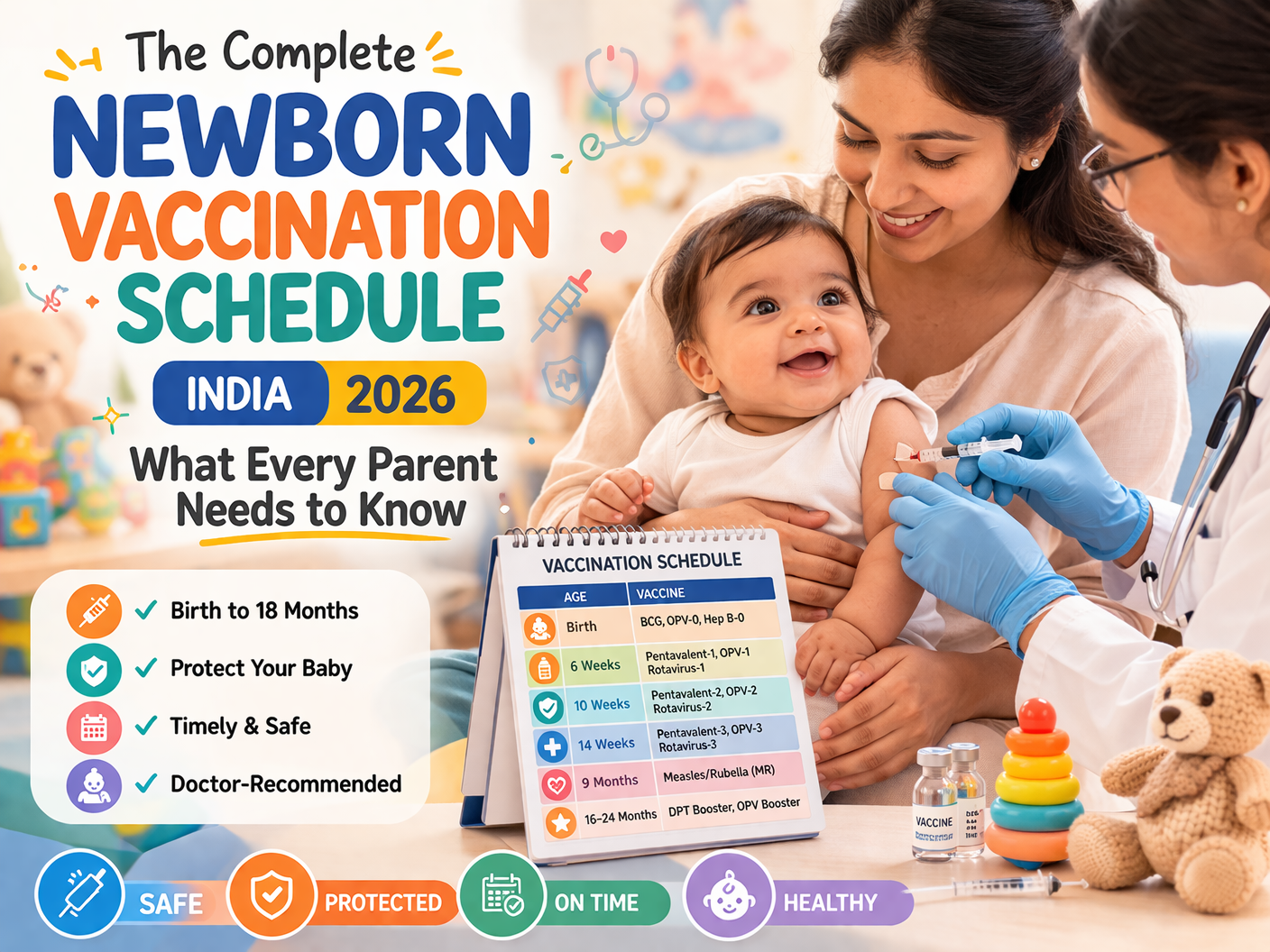
The IAP Recommended Vaccination Schedule
At Birth
BCG — protects against tuberculosis, particularly the severe forms that affect young children including TB meningitis. Given as a small injection into the skin of the left upper arm, leaving a small scar.
Hepatitis B (first dose) — protects against hepatitis B infection, which can cause serious liver disease. Ideally given within 24 hours of birth.
OPV 0 (oral polio vaccine) — protects against poliomyelitis. Given as drops in the mouth.
At 6 Weeks
DTwP or DTaP (first dose) — protects against diphtheria, tetanus and pertussis (whooping cough). One of the most important vaccines in the schedule — whooping cough can be life-threatening in young infants.
Hepatitis B (second dose), OPV 1, Hib (first dose) — Hib protects against Haemophilus influenzae type b, a major cause of bacterial meningitis in young children.
Rotavirus (first dose) — protects against rotavirus, the most common cause of severe diarrhoea in infants and young children.
PCV (first dose) — pneumococcal vaccine, protects against pneumococcal bacteria which cause pneumonia, meningitis and ear infections.
At 10 Weeks
DTwP/DTaP (second dose), OPV 2, Hib (second dose), Rotavirus (second dose), PCV (second dose)
At 14 Weeks
DTwP/DTaP (third dose), OPV 3, Hib (third dose), Rotavirus (third dose — if applicable), PCV (third dose), IPV (first dose) — injectable polio vaccine.
At 6 Months
Hepatitis B (third dose), OPV 4, Influenza (first dose) — flu vaccine is recommended annually for all children from 6 months onwards.
At 9 Months
MMR (first dose) — protects against measles, mumps and rubella. Measles remains a significant cause of childhood death in India.
At 12 Months
Hepatitis A (first dose), Varicella (first dose) — protects against chickenpox.
At 15 Months
MMR (second dose), Varicella (second dose), PCV booster.
At 16-18 Months
DTwP/DTaP booster, OPV booster, Hib booster, IPV second dose.
🛒 RECOMMENDED PRODUCT Baby Vaccination Record Book Keeping an organised vaccination record makes it easy to stay on schedule and track your baby's health milestones. Search for a baby vaccination record book on Amazon — paste your affiliate link here. 🔗 Amazon Link: Baby Vaccination Record Book |
What to Expect After Vaccinations
Most babies experience some reaction after vaccination — this is completely normal and is a sign that the immune system is responding. Common reactions include soreness, redness or swelling at the injection site, mild fever (usually within 24 hours), increased fussiness, and extra sleepiness. These reactions typically resolve within 24 to 48 hours.
A fever after vaccination in a baby under three months should always be assessed by a doctor, even if you believe it is vaccine-related. In older babies, a mild post-vaccination fever can generally be managed at home with appropriate infant paracetamol and extra feeds.
🛒 RECOMMENDED PRODUCT Dr Trust Digital Thermometer Baby Always have a reliable digital thermometer at home to monitor post-vaccination fever accurately. Paste your Amazon affiliate link here. 🔗 Amazon Link: Dr Trust Digital Thermometer Baby |
Finding a Trusted Pediatrician for Vaccinations
Your baby's vaccination schedule requires regular visits to a trusted pediatrician. Finding the right doctor before your baby is born is one of the best investments you can make in their health. Visit firstchoiceclub.in to find verified pediatricians in your area who can guide you through the complete vaccination schedule.
22 Mar