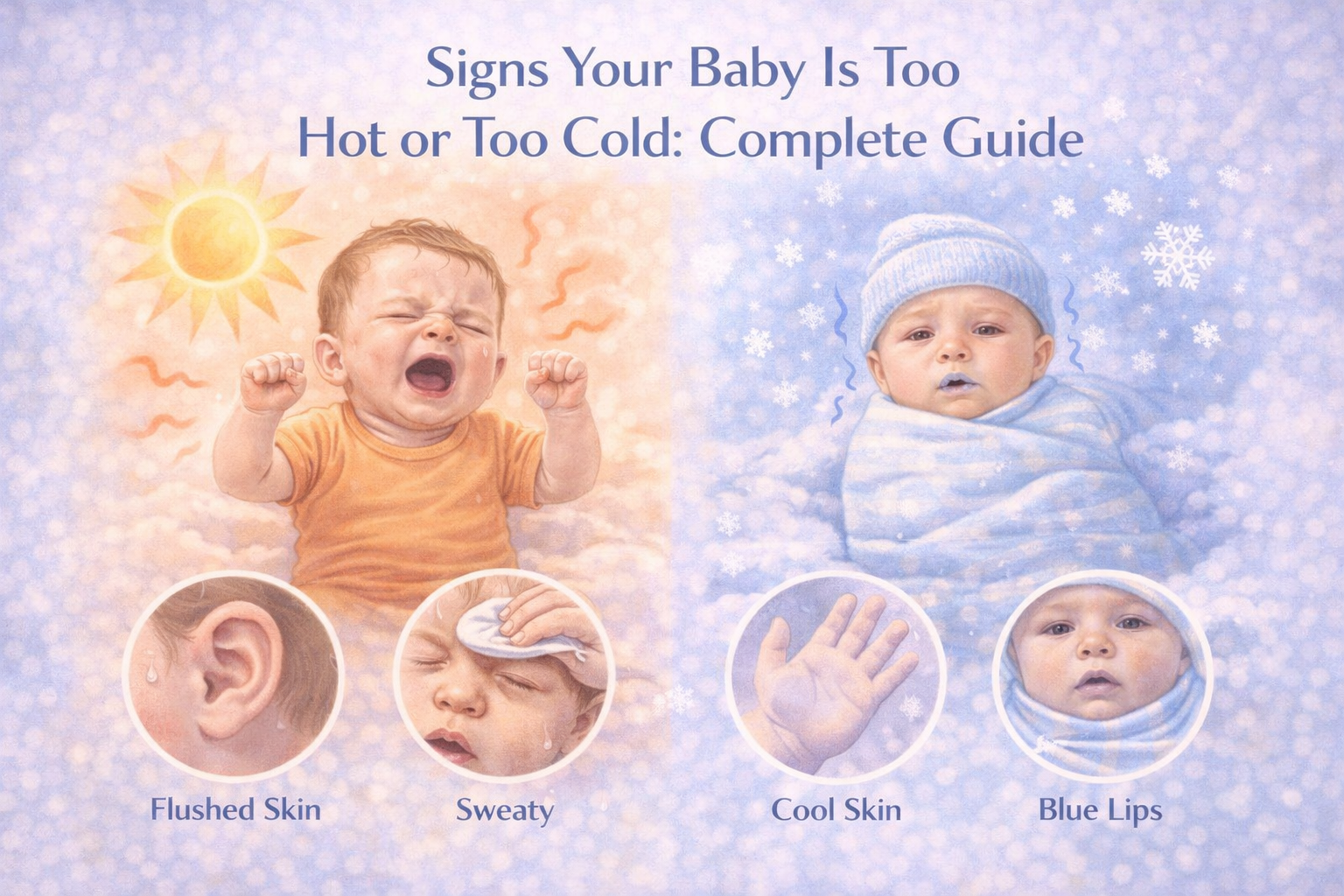
Signs Your Baby Is Too Hot or Too Cold: Complete Guide
Getting your baby's temperature right is one of the most important safety tasks you have as a parent. Babies cannot regulate their own body temperature effectively — and being too hot can be dangerous, while being too cold can slow their development. Here is everything you need to know.
Why Temperature Regulation Matters
Overheating is one of the risk factors associated with SIDS (Sudden Infant Death Syndrome). On the other hand, being too cold can cause a baby's blood sugar to drop, making them lethargic and unwell. The goal is to keep your baby comfortably warm — not hot, not cold.
Signs Your Baby Is Too Hot
Check for these warning signs:
If your baby seems very unwell alongside overheating — high temperature, lethargic, very rapid breathing — seek medical attention.
Signs Your Baby Is Too Cold
Note: cold hands and feet alone are normal in babies — always check the chest, tummy, or back for a true temperature reading.
How to Check Your Baby's Temperature
The Right Room Temperature
Situation | Recommended Temperature |
Baby's bedroom (sleeping) | 16-20°C (ideal: 18°C) |
Rest of the home | 18-21°C |
Bath water | 37-38°C (elbow test: comfortable) |
Formula milk | Body temperature (37°C) |
Dressing Your Baby for Sleep
A good guide: dress your baby in one more layer than you would wear comfortably. Use the TOG rating on sleeping bags as a guide:
Never use a duvet, quilt, or pillow for babies under 12 months — use a well-fitted sleeping bag instead.
Seasonal Tips
Summer
Winter
Car Seat Safety
This is a critical and often overlooked point: do not put baby in their car seat in a thick coat or snowsuit. The padding compresses in a crash and reduces the harness effectiveness. Instead, dress normally and use a blanket over the harness straps.
Written by First Choice Club Team – Baby Care Experts”
Disclaimer
This content is for educational purposes…
First Choice Club | Baby & Parenting Tips
SEO Meta Description: Complete guide to knowing if your baby is too hot or too cold. Signs to look for, safe room temperatures, dressing advice, and seasonal tips to keep baby safe. |
29 Mar