Safe Co-Sleeping Tips: A Complete Guide for Indian Parents
Co-sleeping — sharing a sleep space with your baby — is one of the most common infant sleep practices in India and across much of Asia. For many Indian families, it is a deeply embedded cultural tradition tied to closeness, bonding and the practical realities of nighttime breastfeeding. Yet it is also a practice that carries real risks when done without proper precautions.
This guide gives you an honest, evidence-based overview of co-sleeping: what makes it safer, what makes it dangerous, and what the safest alternative sleep arrangements look like.
The Evidence on Co-Sleeping
The official guidance from major pediatric organisations — including the American Academy of Pediatrics and the Indian Academy of Pediatrics — recommends against bed-sharing, particularly for babies under four months, premature babies, and babies of parents who smoke or have consumed alcohol. This guidance is based on data showing that bed-sharing increases the risk of sudden infant death syndrome and accidental suffocation.
At the same time, research also shows that breastfeeding rates are higher among families who co-sleep, and that room-sharing without bed-sharing is associated with reduced SIDS risk. The picture is nuanced, and it is important that parents have accurate information to make genuinely informed decisions.
What Makes Co-Sleeping More Dangerous
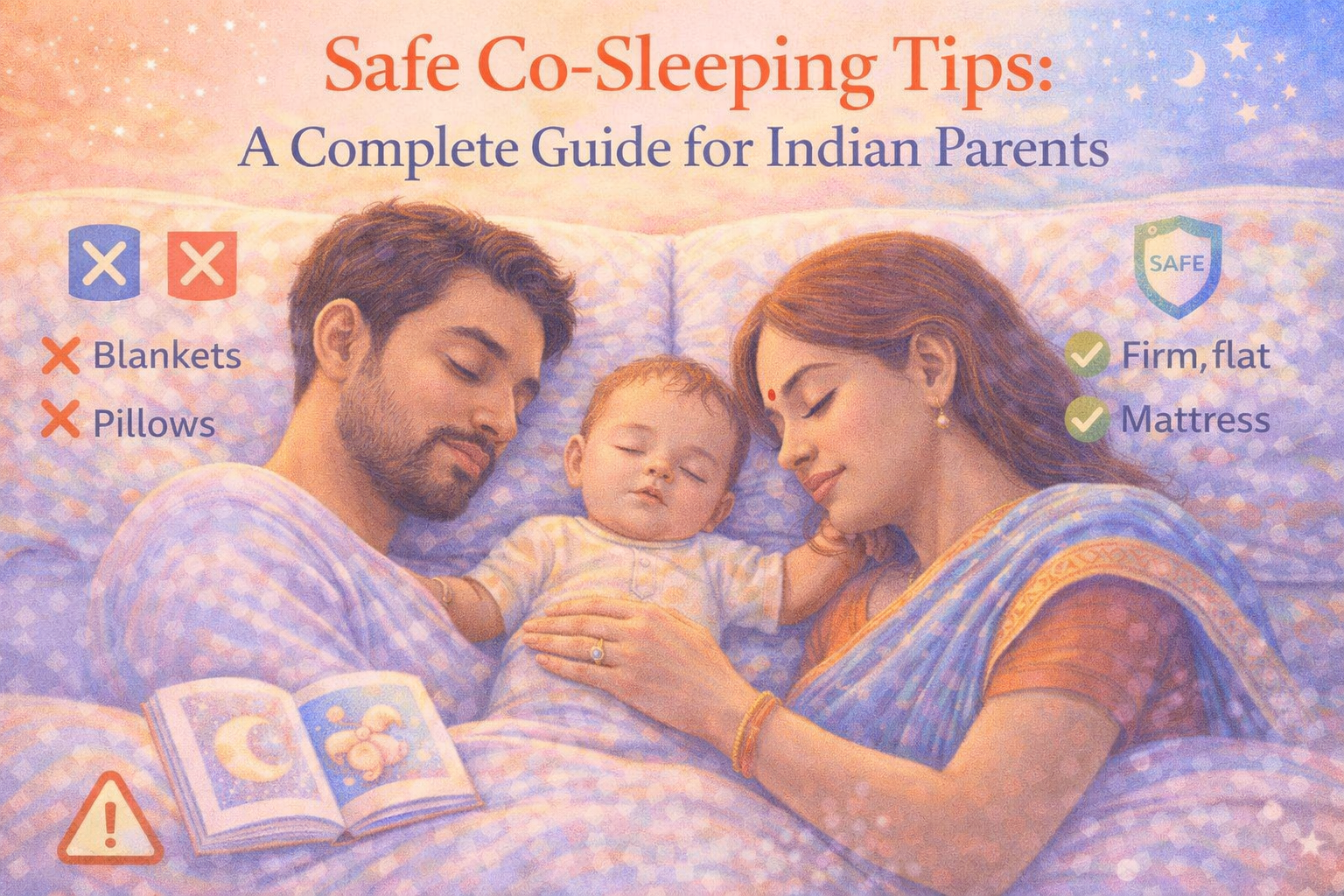
• Soft mattresses, heavy duvets, pillows or any soft bedding near the baby
• Either parent smokes — even if they do not smoke in bed
• Either parent has consumed alcohol, sleeping medication or recreational drugs
• Baby was premature or had low birth weight
• Baby is under four months old
• Baby is dressed in too many layers and becomes overheated
Safer Co-Sleeping Practices for Families Who Choose to Bed-Share
If you choose to bed-share, the following precautions significantly reduce risk — though they do not eliminate it entirely:
• Place baby on their back on a firm, flat mattress — never on a waterbed, sofa or armchair
• Keep all pillows, duvets and soft bedding away from the baby's sleep area
• Dress baby lightly — overheating is a significant risk factor
• Never co-sleep after consuming alcohol or medications that affect alertness
• Breastfeeding mothers often sleep in a protective C-position — baby at breast level, knees drawn up to prevent baby from sliding under covers
• Consider a bedside bassinet as a safer alternative — baby is close but on a separate surface
🛒 RECOMMENDED PRODUCT Chicco Bedside Bassinet A bedside bassinet offers the closeness of co-sleeping with the safety of a separate sleep surface. Search for a bedside bassinet on Amazon — paste your affiliate link here. 🔗 Amazon Link:Chicco Bedside Bassinet |
Room-Sharing: The Evidence-Backed Middle Ground
Room-sharing — having your baby sleep in their own sleep space in the same room as you — is recommended by most pediatric organisations for at least the first six months. It reduces SIDS risk by up to 50 percent compared to sleeping in a separate room, while eliminating the risks associated with bed-sharing.
The proximity means you can respond quickly to your baby's feeding cues, and many parents find it easier to resettle a baby who has not fully woken than one who has cried alone for several minutes.
🛒 RECOMMENDED PRODUCT Baby Sleep Sack Cotton India A cotton baby sleep sack eliminates the need for loose blankets in the sleep space — one of the key hazards in any sleep environment. Paste your Amazon affiliate link here. 🔗 Amazon Link:Baby Sleep Sack Cotton India |
Choosing What Is Right for Your Family
Every family is different, and the right sleep arrangement is the one that keeps your baby safest while being sustainable for your own rest and wellbeing. A severely sleep-deprived parent who falls asleep on a sofa while feeding is in a much more dangerous situation than a parent who has made an informed decision to room-share following safety guidelines.
For trusted pediatricians and postnatal support services in your area, visit firstchoiceclub.in — India's global directory for pregnancy and newborn services.
21 Mar