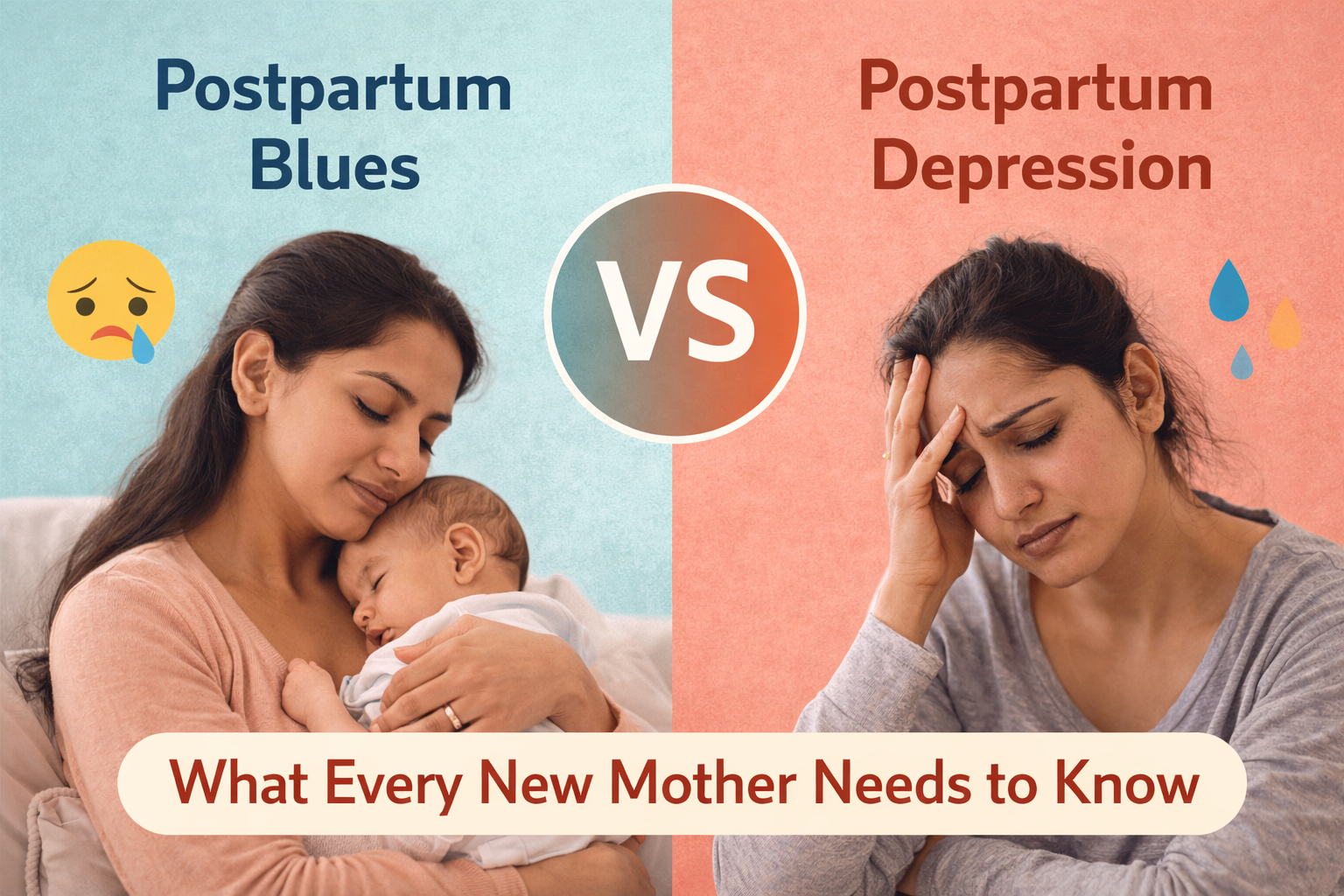
Postpartum Blues vs Postpartum Depression: What Every New Mother Needs to Know
Becoming a mother is one of the most significant psychological transitions of a woman's life. It is normal — expected, even — for the postpartum period to involve emotional turbulence. But there is a significant difference between the normal emotional adjustment of new motherhood and a clinical mood disorder that requires treatment. Understanding that difference is one of the most important things a new mother and her family can know.
The Baby Blues: Normal and Temporary
The baby blues affect the majority of new mothers — estimates range from 50 to 85 percent. They typically begin within the first two to three days after birth, peak around day four or five, and resolve completely by two weeks without any treatment.
Symptoms include tearfulness that comes and goes without obvious reason, feeling emotionally fragile, anxiety about whether you are doing things right, irritability, difficulty sleeping even when the baby is sleeping, and a general sense of being overwhelmed.
The baby blues are a physiological response to the dramatic hormonal changes that occur immediately after birth. They do not indicate that anything is wrong with you as a mother, and they do not predict postpartum depression.
Postpartum Depression: More Than the Blues
Postpartum depression (PPD) affects approximately 10 to 15 percent of new mothers, though many researchers believe the true figure is higher due to underreporting. Unlike the baby blues, PPD does not resolve on its own within two weeks. It is a clinical condition that requires assessment and often treatment.
Symptoms of Postpartum Depression
• Persistent sadness or emptiness that does not lift
• Loss of interest or pleasure in activities you usually enjoy
• Difficulty bonding with your baby — feeling disconnected or like your baby belongs to someone else
• Inability to sleep even when your baby sleeps
• Overwhelming fatigue that goes beyond normal new parent tiredness
• Feelings of worthlessness, excessive guilt or shame
• Difficulty concentrating or making decisions
• Anxiety that is severe, persistent or accompanied by physical symptoms (racing heart, shortness of breath)
• Thoughts of harming yourself or your baby
When Does Postpartum Depression Start?
PPD can begin anytime in the first year after birth — not only immediately postpartum. Many women develop PPD at around three to six months, sometimes triggered by a change in circumstances such as returning to work, weaning from breastfeeding, or a particularly difficult period with the baby.
🛒 RECOMMENDED PRODUCT Gratitude Journal Self Care Postpartum Journaling is a simple evidence-supported tool for emotional processing. A structured gratitude journal takes less than five minutes a day. Search for a self-care journal on Amazon — paste your affiliate link here. 🔗 Amazon Link: Gratitude Journal Self Care Postpartum |
Postpartum Anxiety: The Overlooked Condition
Postpartum anxiety is actually more common than postpartum depression, though it receives less attention. It involves persistent, excessive worry — often about the baby's safety and health — that is difficult to control, interferes with daily functioning, and may be accompanied by physical symptoms like racing heart, shortness of breath and restlessness.
Getting Help: What Treatment Looks Like
The most important step is speaking to your doctor honestly about how you are feeling. PPD and postpartum anxiety are both highly treatable. Treatment options include psychotherapy (particularly cognitive behavioural therapy), medication (antidepressants that are compatible with breastfeeding), and support groups.
You are not a bad mother because you have PPD. PPD is a medical condition, not a character flaw. Getting treatment is not weakness — it is the most loving thing you can do for your baby, who needs you well.
For mental health and postpartum support services in your area, visit firstchoiceclub.in.
22 Mar