How to Count Baby Kicks: The Complete Guide for Expecting Mums
Somewhere around eighteen to twenty-five weeks of pregnancy, you will feel your baby move for the first time. For many women, this is one of the most emotionally significant moments of their pregnancy — the first tangible, physical proof that there is a real person growing inside them. As pregnancy progresses, those first flutters become more coordinated movements, and learning to pay attention to your baby's movement patterns becomes an important part of monitoring your baby's wellbeing.
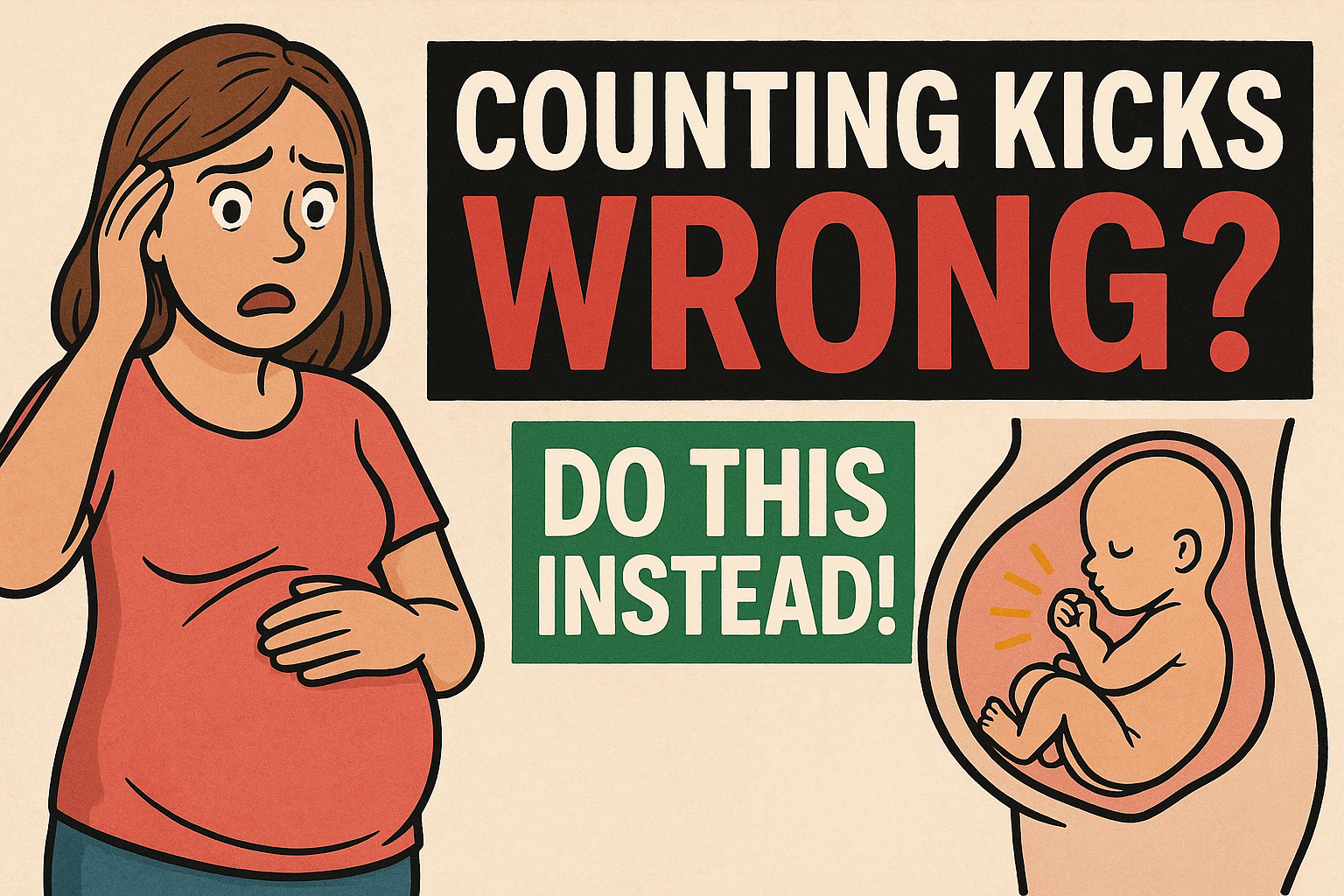
Kick counting — also called fetal movement counting — is a simple, free, and evidence-based practice that allows you to stay aware of your baby's normal movement pattern and notice any significant changes. This guide explains why it matters, when to start, and exactly how to do it correctly.
Why Baby Movement Monitoring Matters
Your baby's movement patterns reflect their overall health and neurological activity. A well-nourished, healthy baby moves in response to sound, light, the food you eat, the time of day, and their own wake-sleep cycles. A baby who is experiencing reduced oxygen supply or nutritional difficulties may show changes in their movement pattern before other signs of distress become apparent on monitoring equipment.
A systematic review published in the Cochrane Database found that formal fetal movement counting did not reduce the overall rate of stillbirth in unselected pregnancies. However, research also shows that women who notice a significant decrease in their baby's movements and seek medical assessment promptly are more likely to have problems identified in time for intervention. The Royal College of Obstetricians and Gynaecologists guidance recommends that all pregnant women be aware of their baby's normal movement pattern and seek assessment promptly if they notice a change.
When to Start Monitoring Baby Movements
Most obstetricians recommend beginning to pay conscious attention to your baby's movements from around twenty-eight weeks of pregnancy. Before this point, movements may still be irregular and the baby's position in the uterus can make them difficult to feel consistently.
By twenty-eight weeks, most babies have established recognisable patterns of activity and rest. You will begin to notice that your baby is more active at certain times of day — many babies are most active in the evenings, possibly because the rocking motion of the mother walking during the day has a soothing effect that ceases when she stops moving. You will also notice that your baby has rest periods, typically lasting twenty to forty minutes, during which movement is minimal or absent. This is normal — babies sleep in the womb.
How to Count Baby Kicks Correctly
The most widely recommended method of fetal movement counting is the count-to-ten method. Choose a time of day when your baby is typically active — often after a meal, in the evening, or at a time when you have noticed regular activity previously. Sit or lie comfortably and count each distinct movement — a kick, roll, punch, swipe, or jab. Do not count hiccups, which feel like a regular rhythmic pulsing and are caused by the diaphragm contracting, not by intentional movement.
Note the time you start counting and the time you reach your tenth movement. In most pregnancies from twenty-eight weeks onwards, a baby will make ten distinct movements within two hours. Record this time each day — a simple notebook or one of the many free kick counting apps available works equally well.
The goal of daily kick counting is not to achieve a specific target but to establish your own baby's normal pattern. Some babies are very active and will reach ten movements within fifteen minutes. Others are calmer and may take forty-five minutes to an hour. Both can be normal for a particular baby. What matters is consistency — you are looking for deviations from your baby's established pattern, not comparison to a universal standard.
What Position Is Best for Counting?
Lying on your left side is generally recommended as the optimal position for fetal movement counting. This position maximises blood flow to the uterus and placenta by taking pressure off the inferior vena cava — the large vein that runs up the right side of the spine. Many women report feeling more movements in this position than when sitting upright. However, sitting comfortably with your back supported is also perfectly acceptable if lying down is not practical.
Being relaxed and focused makes a difference. Put down your phone, turn off the television, and give your attention to the movements you are feeling. This is not only more accurate; many women find it a valuable daily ritual of connection with their baby.
When to Contact Your Doctor or Midwife
Contact your obstetrician, midwife, or maternity unit immediately if you notice fewer than ten movements in two hours during a period when your baby is normally active, if you notice a significant decrease in your baby's overall activity level over the course of a day, or if your baby's movements have felt qualitatively different — weaker, less vigorous, or of a different character than usual.
Do not wait until the next day to raise concerns about reduced fetal movement. Do not convince yourself that your baby is simply sleeping. And never let anyone — including well-meaning family members or online forums — talk you out of seeking assessment if you are worried. Every maternity unit in India is obligated to assess you if you have concerns about fetal movement, and no healthcare provider worth their title will make you feel foolish for attending.
Your instinct about your baby matters. Multiple studies have documented cases where a mother's concern about reduced movement, dismissed by others around her, led to emergency intervention that saved the baby's life. Trust yourself.
22 Oct