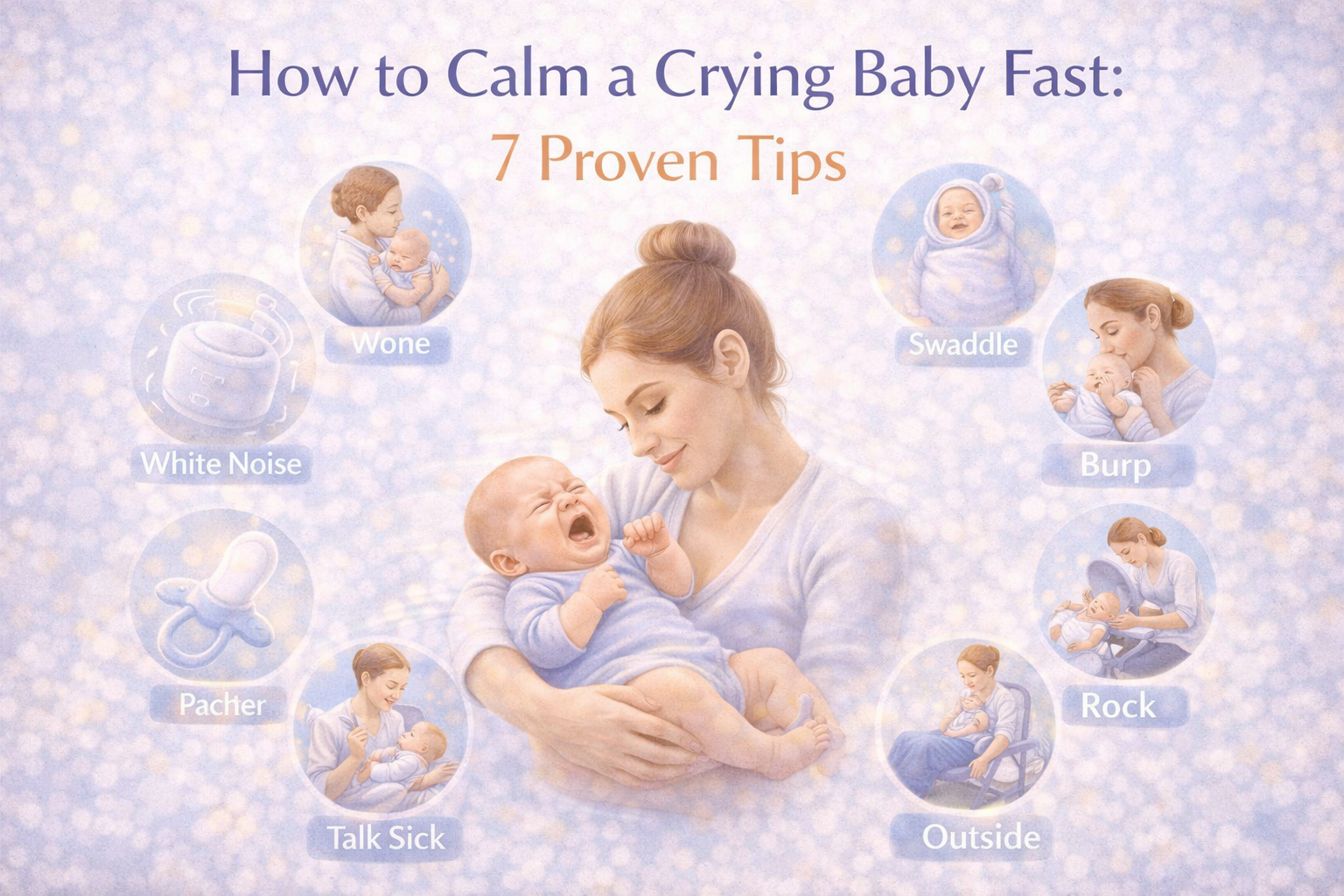
How to Calm a Crying Baby Fast: 7 Proven Tips
There is nothing more stressful than a baby who will not stop crying. You have tried everything and you are running out of ideas. Take a breath — we have got 7 proven techniques that actually work, backed by both science and the experience of millions of parents.
Why Babies Cry
Before we dive in, remember: crying is your baby's only way of communicating. It does not mean you are failing. Common reasons include hunger, tiredness, discomfort, overstimulation, loneliness, and the need for comfort. Sometimes it is a combination.
The 7 Proven Techniques
1. The 5 S's (Dr Harvey Karp's Method)
Developed by paediatrician Dr Harvey Karp, the 5 S's mimic the womb environment:
The key is doing all 5 together for maximum effect.
2. White Noise
In the womb, babies hear constant sounds as loud as a vacuum cleaner. White noise recreates this. Try:
Turn it up — it needs to be louder than the crying to work initially.
3. Motion
Babies are calmed by rhythmic movement — just like being in the womb while mum walked around. Options:
4. Skin-to-Skin Contact
Holding your baby skin-to-skin (chest to chest) releases oxytocin — the bonding hormone — in both of you. It regulates their temperature, heart rate, and breathing, and is incredibly calming. This works for dads and partners too!
5. Check and Address Physical Needs
Run through this checklist quickly:
6. Change of Environment
Sometimes babies need a reset. Try:
7. The Colic Hold
Place your baby face-down along your forearm, their head near your elbow, legs straddling your hand. Apply gentle pressure to the tummy while rocking. This can provide real relief from gas and general fussiness.
When Nothing Works: Take Care of Yourself
If your baby has been crying for a long time and you feel yourself becoming overwhelmed — it is okay to put them down safely in their cot for 5 minutes and step away. A crying baby in a safe cot is safer than a parent at breaking point. Take a breath, have a glass of water, and go back in.
You are not a bad parent. This is one of the hardest parts of having a newborn, and it gets better.
When to Call a Doctor
Written by First Choice Club Team – Baby Care Experts”
Disclaimer
This content is for educational purposes…
First Choice Club | Baby & Parenting Tips
SEO Meta Description: 7 proven tips to calm a crying baby fast. From the 5 S method to white noise, skin-to-skin and motion — practical techniques that actually work for new parents. |
27 Mar