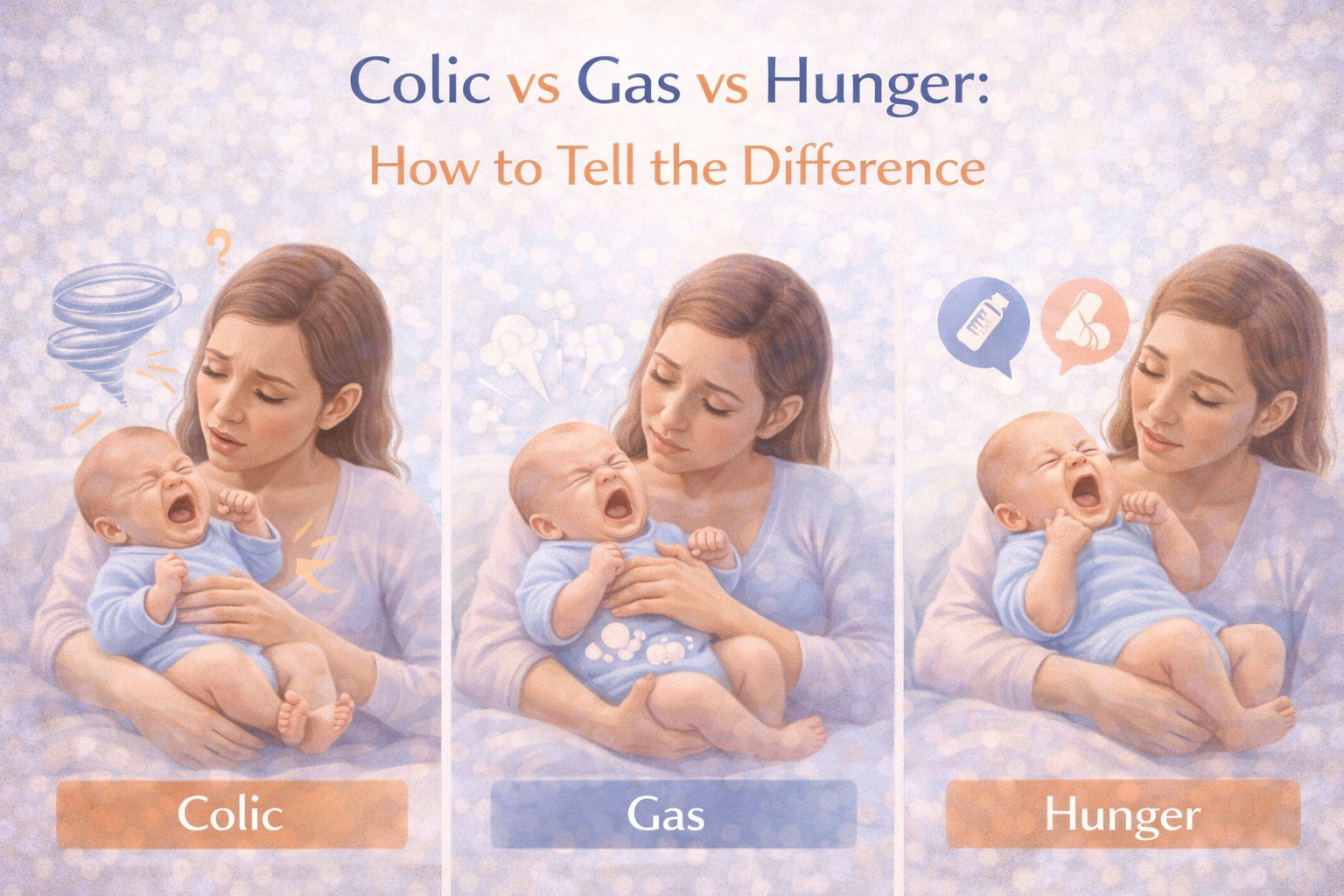
Colic vs Gas vs Hunger: How to Tell the Difference
Your baby is crying. You have fed them, changed them, cuddled them — and they are still crying. One of the hardest parts of being a new parent is figuring out why your baby is upset. Is it colic? Gas pain? Or are they just hungry again?
Let us break it down clearly so you can respond with confidence.
The Key Differences at a Glance
| Hunger | Gas | Colic |
Cry sound | Rhythmic, low | Sharp, high-pitched | Intense, inconsolable |
Timing | Gradual build-up | After feeds | Evening, 3+ hours |
Body language | Rooting, open mouth | Legs pulled up, arching | Clenched fists, red face |
Relieved by | Feeding | Burping, bicycle legs | Usually nothing works |
Age pattern | Any age | Any age | Peaks 4-6 weeks |
Recognising Hunger
Hunger is often the easiest to identify if you catch it early. Look for:
Pro tip: Feed before the crying starts. Hunger cues come well before crying — which is a late sign.
Recognising Gas Pain
Gas is very common in newborns whose digestive systems are still maturing. Signs include:
How to help with gas:
Understanding Colic
Colic is defined as crying for more than 3 hours a day, more than 3 days a week, for more than 3 weeks in an otherwise healthy baby. It is frustrating because there is no single cause and nothing reliably fixes it.
Colic typically:
Things that may help with colic:
When to See a Doctor
Always get checked if your baby:
Written by First Choice Club Team – Baby Care Experts”
Disclaimer
This content is for educational purposes…
27 Mar