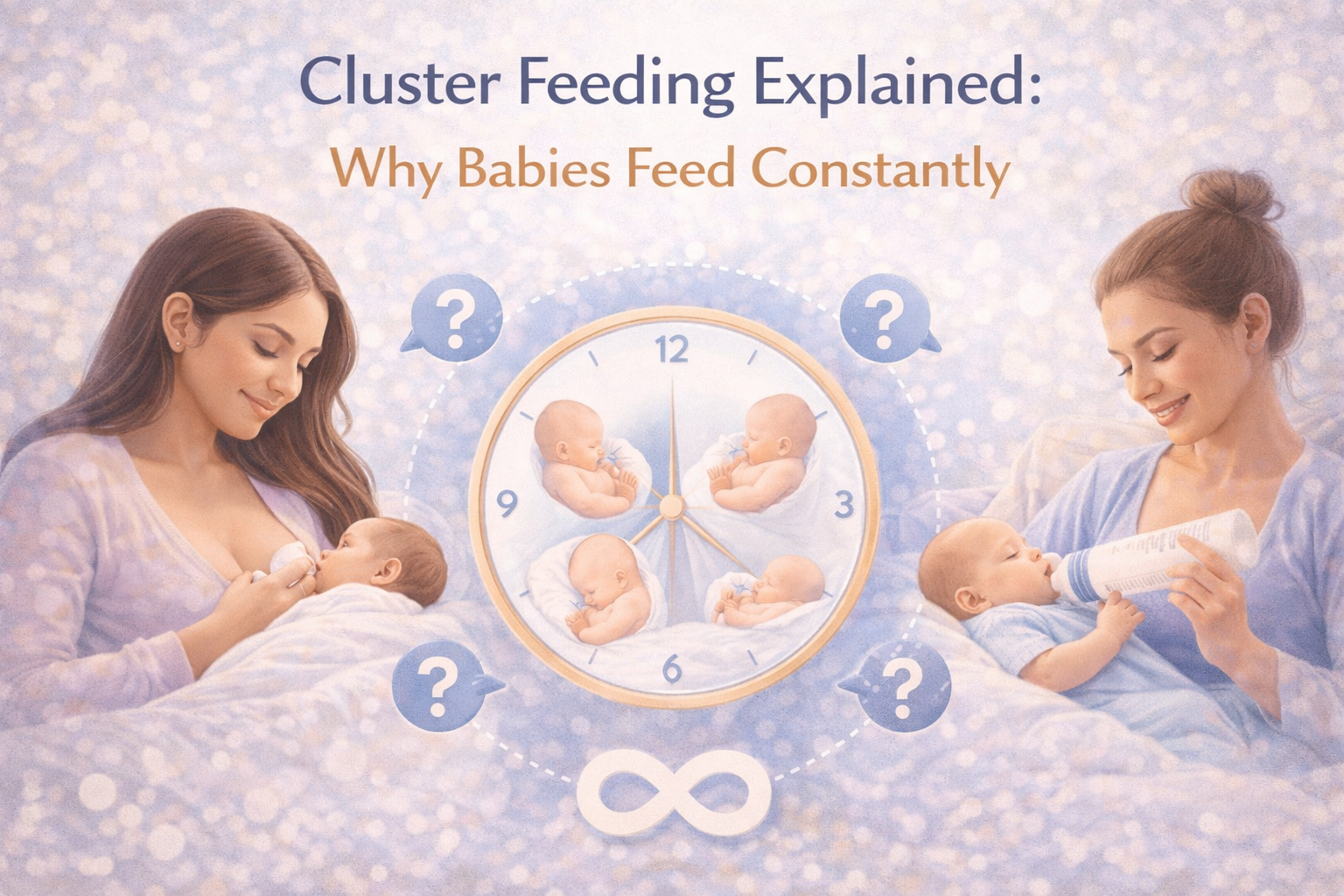
Cluster Feeding Explained: Why Babies Feed Constantly
You have just fed your baby. They seemed satisfied. You set them down... and five minutes later they are crying to feed again. Sound familiar? Welcome to cluster feeding — one of the most exhausting but completely normal parts of newborn life.
What is Cluster Feeding?
Cluster feeding is when your baby wants to feed very frequently — sometimes every 20 to 45 minutes — usually in the late afternoon or evening. Instead of the typical 2-3 hour gaps, feeds are bunched together (clustered) over a few hours.
It is completely normal and very common, especially in breastfed babies during the first few months.
When Does Cluster Feeding Happen?
Why Do Babies Cluster Feed?
There are several reasons your baby may be cluster feeding:
Growth spurts: Your baby needs extra calories to support rapid development.
Boosting milk supply: Frequent feeding signals your body to produce more milk. It is your baby's way of increasing your supply.
Comfort and security: Breastfeeding is not just about food — it is also warmth, comfort, and closeness.
Developmental leaps: When babies are going through cognitive development, they seek more comfort feeding.
Evening fussiness: Many babies are simply more unsettled in the evenings — a very well-documented phenomenon.
Is My Baby Getting Enough Milk?
This is the question every parent asks during cluster feeding. Here is how to know feeding is going well:
How to Cope With Cluster Feeding
When to Seek Help
Cluster feeding is normal, but contact your midwife or health visitor if:
The Light at the End of the Tunnel
We know cluster feeding can feel relentless and exhausting. But here is the truth: it almost always passes within a few days. And each cluster feeding phase is usually followed by your baby sleeping a longer stretch — their little tummies are full and their bodies are growing.
You are not doing anything wrong. You are doing everything right.
Written by First Choice Club Team – Baby Care Experts”
Disclaimer
This content is for educational purposes…
First Choice Club | Baby & Parenting Tips
SEO Meta Description: What is cluster feeding and why do babies feed constantly? Everything parents need to know about cluster feeding, including coping tips and when to seek help. |
26 Mar