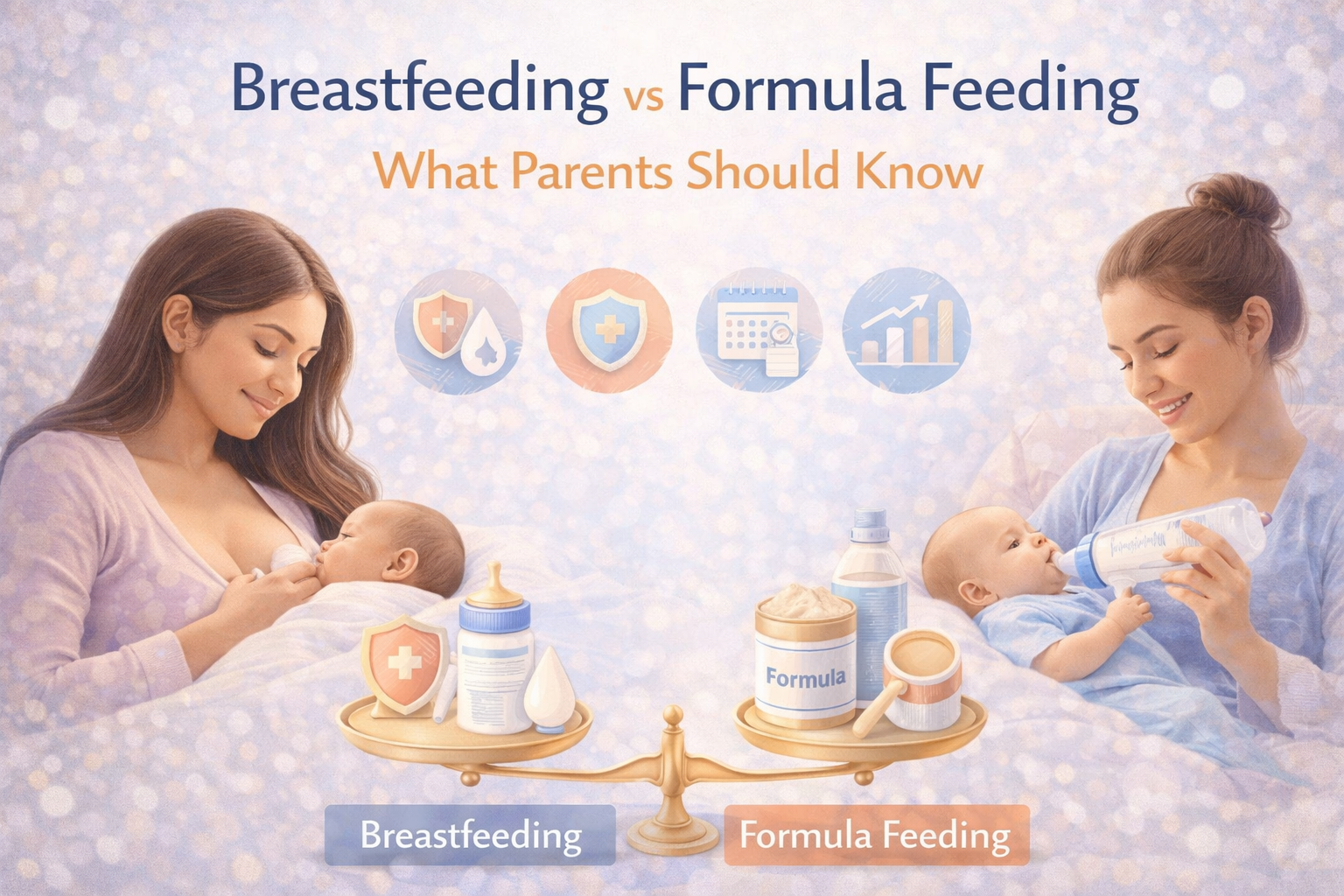
Breastfeeding vs Formula Feeding: What Parents Should Know
One of the first decisions you will make as a new parent is how to feed your baby. Whether you choose breastfeeding, formula feeding, or a combination of both — what matters most is that your baby is fed, healthy, and loved. Let us walk through both options honestly so you can make the best choice for your family.
Breastfeeding: The Benefits
The WHO recommends exclusive breastfeeding for the first 6 months, followed by continued breastfeeding with solid foods until age 2 or beyond.
Breastfeeding: The Challenges
If you are struggling, please reach out to a lactation consultant before giving up. Most breastfeeding challenges can be resolved with the right support!
Formula Feeding: The Benefits
Formula Feeding: The Challenges
Combination Feeding
Many families choose combination feeding — some breastfeeds and some bottles of formula or expressed milk. This can be a great middle-ground option if:
Important tip: introduce a bottle after breastfeeding is well established (usually 4-6 weeks) to avoid nipple confusion.
Side-by-Side Comparison
| Breastfeeding | Formula |
Cost | Free | Expensive |
Convenience | Always ready | Prep required |
Nutrition | Dynamic & perfect | Good, standardised |
Immunity | High antibodies | None |
Flexibility | Mum required | Anyone can feed |
Measurement | Harder to measure | Easy to measure |
The Most Important Thing
Fed is best. A fed, loved, and cared for baby is what matters. Do not let anyone make you feel guilty for the feeding method that works best for you and your family. You are doing an amazing job.
Written by First Choice Club Team – Baby Care Experts”
Disclaimer
This content is for educational purposes…
25 Mar