🌼 Signs of Postpartum Blues vs Depression: Know Wheny to Get Help ❤️
Becoming a mother is one of life’s most beautiful transformations, but it can also feel overwhelming, exhausting, and confusing. While it’s common to experience emotional ups and downs after birth, it’s important to recognize the difference between postpartum blues (often called baby blues) and postpartum depression. Knowing these signs early can help you get the right support — because you don’t have to go through it alone. ❤️
⸻
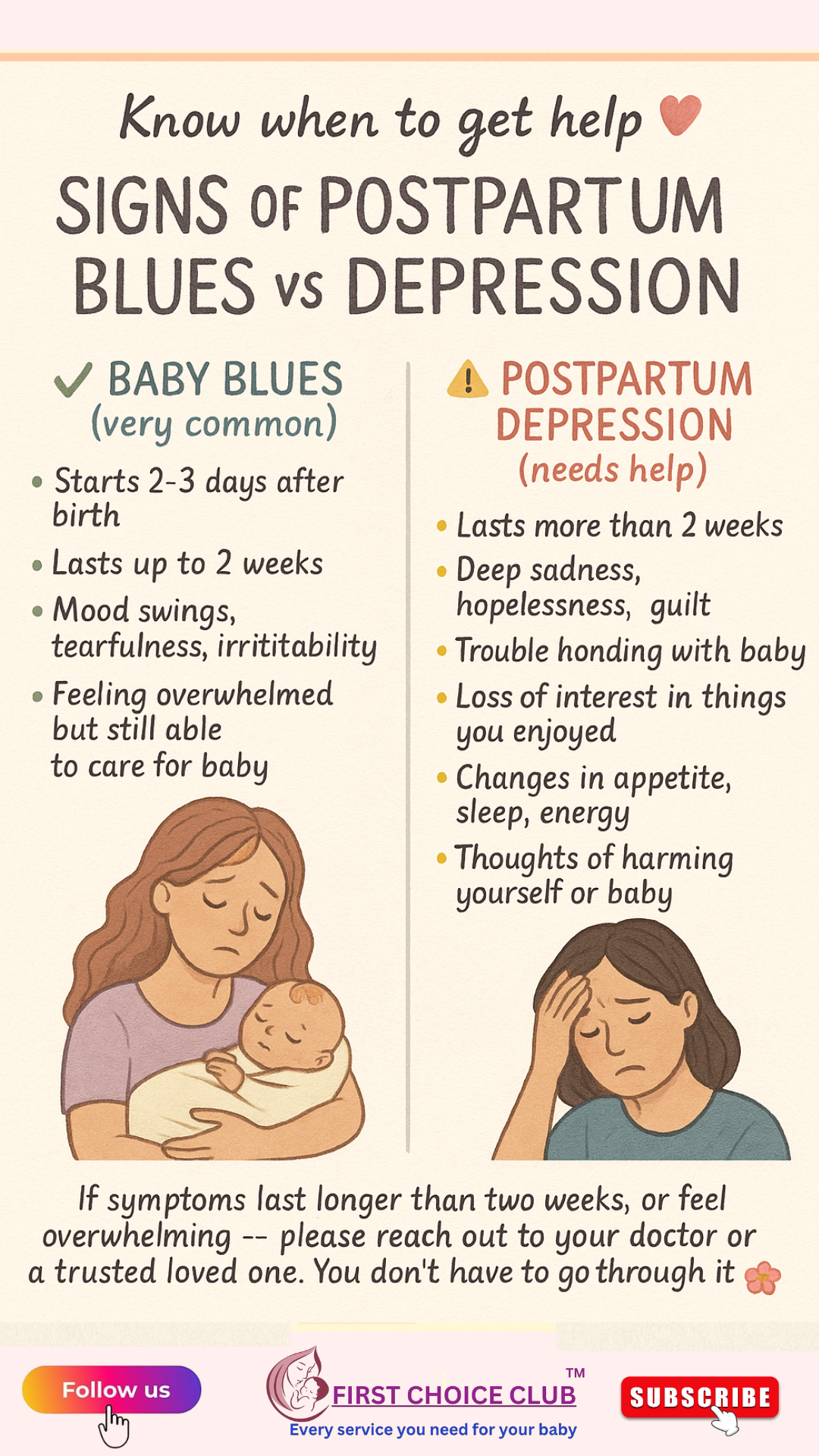
🤱 What Are Postpartum Blues (Baby Blues)?
Postpartum blues are very common, affecting up to 70–80% of new mothers worldwide. They typically appear 2–3 days after giving birth and may last for about 1–2 weeks.
Baby blues happen because of:
• Sudden drop in pregnancy hormones (estrogen & progesterone)
• Physical exhaustion from childbirth
• Adjustment to round-the-clock newborn care
• Lack of sleep and big life changes
Common signs of baby blues:
• Mood swings: happy one moment, tearful the next
• Feeling overwhelmed but still able to care for the baby
• Irritability or anxiety
• Trouble sleeping (even when the baby sleeps)
• Reduced concentration
• Crying unexpectedly
These feelings usually come and go and improve on their own. Simple support — like rest, help from family, and talking to other moms — often helps.
⸻
⚠️ What Is Postpartum Depression?
Postpartum depression (PPD) is different from baby blues.
It is more intense, lasts longer (more than 2 weeks), and needs professional help.
Studies show PPD affects around 10–15% of new mothers. It can appear anytime within the first year after birth, though it often starts within the first few months.
Signs of postpartum depression:
• Persistent sadness, hopelessness, or emptiness
• Feelings of guilt or worthlessness
• Loss of interest in activities you used to enjoy
• Difficulty bonding with your baby
• Withdrawal from family and friends
• Changes in appetite or significant weight change
• Trouble sleeping or sleeping too much
• Low energy or extreme fatigue
• Thoughts of harming yourself or your baby
If you or someone you know is experiencing these symptoms, it’s so important to reach out for medical help.
⸻
🌱 Why Recognizing the Difference Matters
Many moms don’t ask for help because:
• They feel they “should be happy”
• Fear of judgment
• Worry that asking for help means they’re failing as mothers
But postpartum depression is not your fault.
It’s a medical condition that can be treated. The sooner it’s recognized, the sooner you can feel better.
⸻
🌸 Tips for Coping & Seeking Help
Whether you’re experiencing baby blues or postpartum depression, here are gentle, practical steps that might help:
✅ Talk openly: Share your feelings with your partner, family, or friends.
✅ Accept help: Let others cook, clean, or hold the baby so you can rest.
✅ Prioritize rest: Sleep when your baby sleeps, even if chores wait.
✅ Move gently: Short walks and fresh air can boost mood.
✅ Connect: Join new mom groups or online communities.
✅ Nourish your body: Balanced meals and staying hydrated help physical recovery.
✅ Be kind to yourself: Remind yourself healing takes time.
If feelings don’t improve after two weeks, or if sadness feels overwhelming, please contact your doctor or a trusted mental health professional.
⸻
❤️ When to Seek Immediate Help
Seek help right away if you:
• Have thoughts of harming yourself or your baby
• Feel unable to care for your baby
• Experience severe anxiety, panic attacks, or hallucinations
These can be signs of postpartum depression or a rare but serious condition called postpartum psychosis, which needs urgent medical attention.
⸻
🧡 Final Words: You’re Not Alone
Every postpartum journey is different. Feeling sad, anxious, or overwhelmed does not make you a bad mother — it makes you human.
With awareness, support, and professional care, recovery is possible.
Don’t wait to reach out. You deserve help, hope, and healing. 🌸
If this article helped you, please share it with another mama who might need it. ❤️