How to Sterilize Baby Bottles at Home (Moms’ Guide)
Sterilizing baby bottles is crucial to protect your newborn from germs, infections, and tummy troubles. Here’s how you can do it safely at home:
⸻
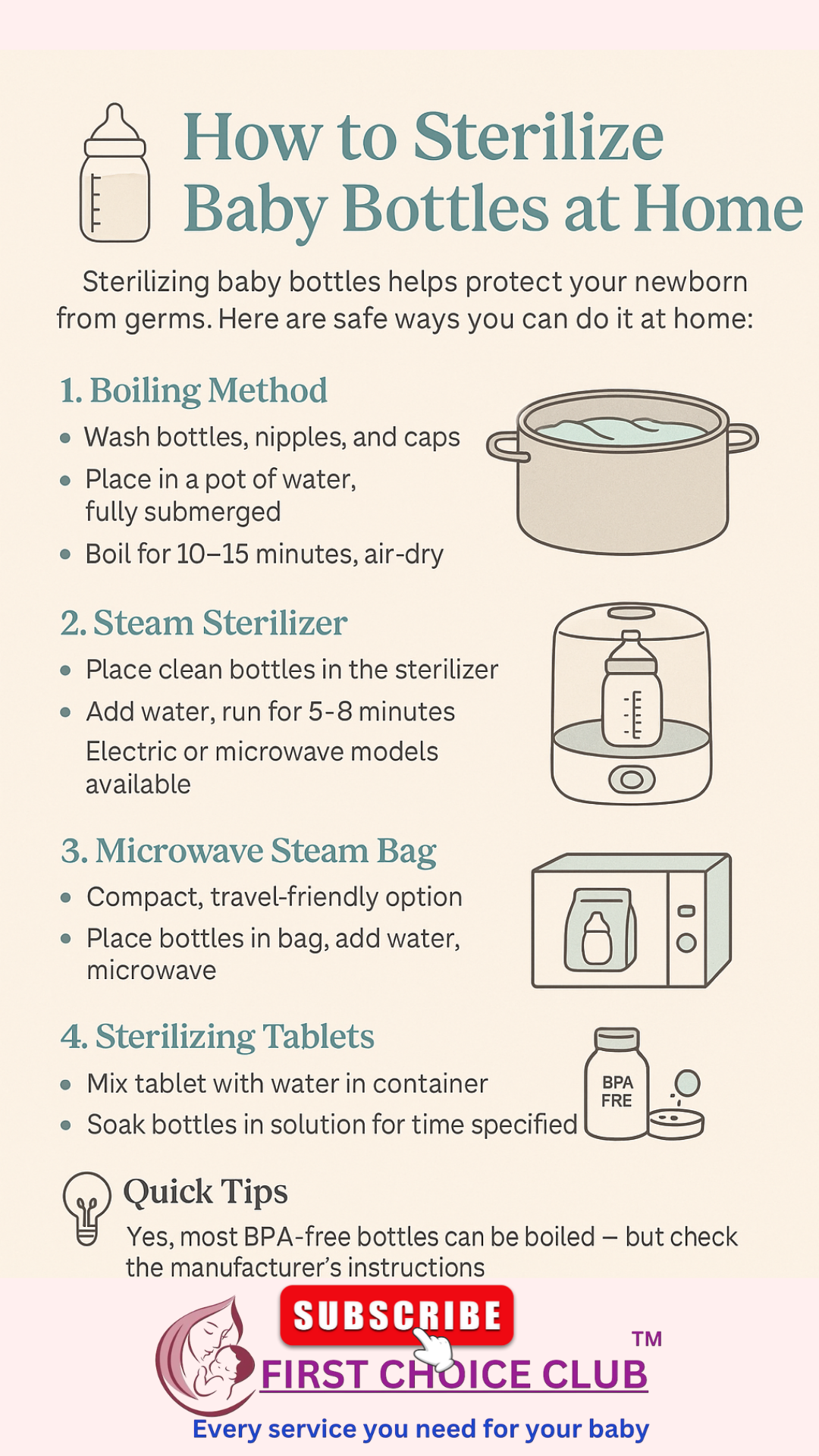
🪔 1. Boiling Method (Traditional & Effective)
Steps:
• Wash bottles, nipples, caps with bottle brush & mild detergent
• Place them in a large vessel filled with water (fully submerged)
• Boil for 10–15 minutes
• Remove with clean tongs, air-dry on a clean cloth or sterilized tray
✅ Best for Indian homes without electric sterilizers
⚠️ Don’t boil bottles with printed designs too often — may fade
⸻
💨 2. Steam Sterilizer (Electric or Microwave)
• Place clean bottles in the sterilizer
• Add required amount of water
• Run for 5–8 minutes (as per device instructions)
✅ Fast and effective
⚠️ Needs electricity and may not be travel-friendly
⸻
🍳 3. Pressure Cooker Method (Indian Hack)
• Add water in the base (no whistle)
• Place bottles upright without touching sides
• Steam for 5–7 minutes on low heat
✅ Works in most Indian kitchens
⚠️ Avoid using high flame; always monitor carefully
⸻
💧 4. Sterilizing Liquid/Tablets (Travel Option)
• Mix sterilizing liquid (like Chicco or Milton) in water as instructed
• Soak bottles/nipples for specified time (usually 30 mins)
• Rinse with boiled cooled water before use
✅ Great for travel or power cuts
⚠️ Always follow product instructions
⸻
🧴 Tips to Remember:
• Always wash hands before handling sterilized bottles
• Use bottle tongs — don’t touch inside with fingers
• Air-dry — avoid wiping with towels (can transfer germs)
🔍 Can BPA-Free Plastic Bottles Be Boiled?
Yes — most BPA-free plastic baby bottles can be boiled, but you need to check a few things first:
⸻
✅ Things to Check Before Boiling:
1. Label:
Look for “Boil-safe” or “Sterilizer-safe” on the bottle packaging.
2. Material:
BPA-free doesn’t always mean heat-resistant. Bottles made of polypropylene (PP) or silicone usually tolerate boiling.
3. Brand’s Instructions:
Always follow the manufacturer’s sterilization guidelines.
(e.g., Philips Avent, Chicco, and Pigeon bottles often allow boiling.)
⸻
⚠️ Risks of Repeated Boiling:
• Fading of prints or measurements on bottles
• Discoloration or deformation over time
• Can lead to micro-cracks if boiled too long or on high flame
⸻
✅ Safer Alternative:
If you use plastic bottles regularly:
• Alternate between boiling and steam sterilizing
• Or invest in glass bottles (very safe for boiling and long-term)
✅ Steam sterilization can be travel-friendly — especially:
• When using microwave steam sterilizer bags (e.g., Philips Avent, Medela)
• If you carry a compact electric steam sterilizer and have access to power
⸻
✈️ Travel-Friendly Steam Options:
• Microwave bags: Just need a microwave and water — light and reusable
• Small electric sterilizers: Handy for hotels, Airbnbs, or relatives’ homes
Only catch: you need electricity or microwave access, which isn’t always available in rural areas or during travel in India — that’s why we sometimes call boiling or tablets more universally “travel-friendly.”