🍼 How to Calm a Crying Baby in Seconds! (Complete Guide for New Parents)
Every new parent knows the feeling: you’ve fed, burped, and changed your baby, yet the crying continues — and your stress rises with every second. Don’t worry — crying is your baby’s primary way to communicate in the early months. But understanding the possible reasons behind those tears, along with practical calming techniques, can help you soothe your baby quickly and confidently.
In this post, you’ll learn:
• Why babies cry so much
• How to identify what your baby might be trying to tell you
• Proven, gentle methods to calm a crying baby — sometimes in just seconds!
• When to worry and when to relax
Let’s get started! 🌸
⸻
🤔 Why Do Babies Cry So Much?
Crying is completely normal — and healthy — in newborns and infants. Most babies cry for about 1-3 hours per day in the first few months. This is how they express hunger, tiredness, discomfort, or simply a need for closeness.
Common reasons why babies cry:
✅ Hunger (the most common reason!)
✅ Dirty or wet diaper
✅ Need to burp (trapped gas can be uncomfortable)
✅ Feeling too hot or too cold
✅ Overstimulation (too much noise, light, or activity)
✅ Sleepiness or fighting sleep
✅ Colic (unexplained, intense crying, often in the evenings)
✅ Need for comfort or cuddling
Learning to “read” your baby’s cries takes time, but the more you observe, the quicker you’ll spot patterns.
⸻
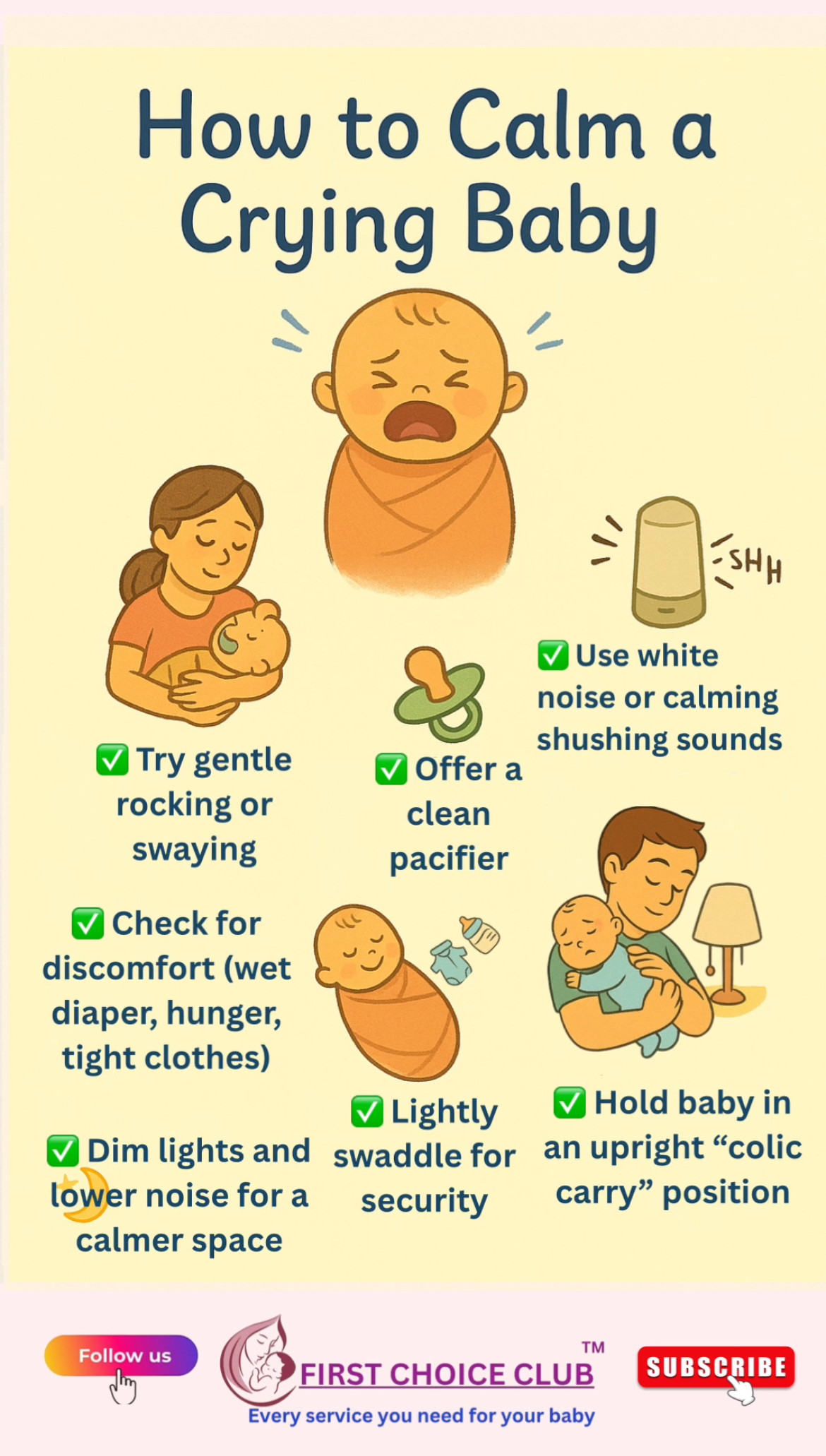
✨ 7 Gentle, Quick Techniques to Calm Your Baby
1️⃣ Gentle rocking or swaying
Babies are used to constant motion inside the womb. Hold your baby close and rock gently side to side, or sway while walking slowly around the room. Using a baby carrier can also help, freeing your hands while your baby feels snug and safe.
2️⃣ Use white noise or calming shushing sounds
The womb is a surprisingly noisy place! White noise (from a machine, app, or even a hairdryer on low placed safely away) or gentle shushing mimics those sounds, calming babies quickly. Many parents swear by “shhhh… shhhh…” sounds close to the baby’s ear.
3️⃣ Offer a pacifier (if your baby likes one)
Sucking is soothing for many babies, even when they aren’t hungry. A clean pacifier can help babies calm down fast.
4️⃣ Check for discomfort
Sometimes the crying stops immediately once you fix the cause: change a wet diaper, loosen tight clothes, remove a hair wrapped around a finger, or offer a feed if it’s been a while.
5️⃣ Light swaddle for security
Newborns often startle themselves awake with sudden arm movements. A light, breathable swaddle makes them feel snug — like in the womb — and can stop crying quickly.
6️⃣ Hold in an upright “colic carry” or tummy hold
Gas or tummy discomfort is common. Try placing your baby face down across your forearm (tummy down, head supported), or upright on your shoulder while gently patting their back.
7️⃣ Create a calming environment
Lower the lights, move to a quieter room, and speak softly. Babies can get overstimulated, and reducing sensory input often calms them in seconds.
⸻
🕒 The “5 S’s” Method (Dr. Harvey Karp)
Dr. Karp’s famous method includes:
• Swaddle: snug, not too tight
• Side or stomach position: for calming only (always put baby to sleep on their back!)
• Shush: loud, rhythmic shushing sounds
• Swing: gentle, small movements
• Suck: pacifier or clean finger
Used together, these can calm many crying babies remarkably fast.
⸻
💡 Extra Tips Parents Swear By
✅ Try skin-to-skin contact: your warmth and heartbeat soothe naturally
✅ Offer a warm bath
✅ Go outside: fresh air and gentle motion of a stroller or baby carrier can do wonders
✅ Gently massage baby’s tummy in clockwise circles to help with gas
✅ Sing softly or hum — your voice is familiar and comforting
Every baby is unique, so try different combinations to discover what works best.
⸻
🚨 When Crying Could Signal Something More Serious
Occasional, hard-to-calm crying is normal. But call your pediatrician if:
• Crying sounds high-pitched, weak, or unusually persistent
• Baby has fever, vomiting, rash, trouble breathing, or refuses feeds
• Baby seems unusually sleepy or hard to wake
• You suspect pain or injury
Trust your instincts: you know your baby best.
⸻
🌼 Staying Calm as a Parent
It can be overwhelming when nothing seems to work. Remember:
• It’s not your fault — babies cry, often without clear reasons
• Place your baby safely in the crib for a few minutes and step away if you feel overwhelmed
• Take deep breaths, ask for help from a partner or family member, and remind yourself this phase will pass
⸻
📌 Key Takeaways
✅ Babies cry to communicate, not to upset you
✅ Try gentle rocking, white noise, swaddling, and other proven techniques
✅ Watch for patterns to understand your baby’s needs
✅ Seek help if crying seems unusual or you feel concerned
⸻
💕 Final Thoughts
Every baby — and every day — is different. What calms your baby in seconds one night might take longer the next. That’s normal. Your patience, gentle touch, and love are the real “magic” that helps your baby feel secure.
With time, you’ll gain confidence and find your baby’s favorite soothing tricks — and those crying spells won’t feel so stressful anymore. ❤️