Co-Sleeping with Your Baby: A Complete Safety Guide for Indian Parents
Co-sleeping — the practice of sleeping in close proximity to your baby — is not a modern trend. It is the default sleeping arrangement for the majority of families around the world, and it has been the norm in India for generations. Yet co-sleeping is also a topic surrounded by genuine safety concerns that every parent needs to understand before making a decision about where their baby sleeps.
This guide explains the different types of co-sleeping, the evidence on risks and benefits, and the specific safety practices that make co-sleeping as safe as possible for your family.
Understanding the Different Types of Co-Sleeping
Co-sleeping is not a single practice — it describes several different arrangements that have very different risk profiles.
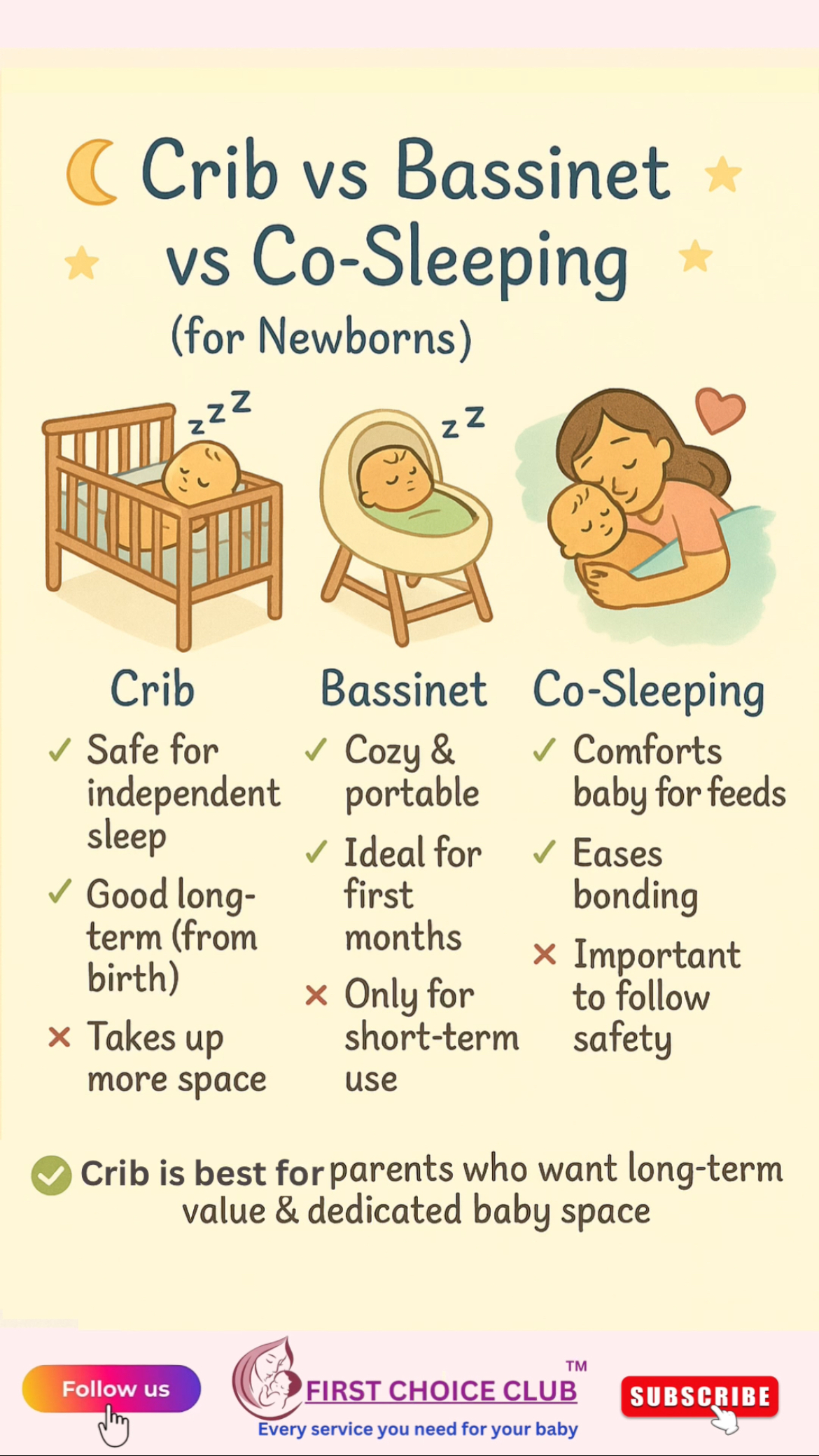
Room-sharing means your baby sleeps in the same room as you but on a separate surface — in a cot, bassinet, or bedside sleeper placed next to your bed. This is the arrangement recommended by the American Academy of Pediatrics, the UK's National Health Service, and India's major pediatric bodies. Room-sharing offers the convenience and closeness of co-sleeping while maintaining a separate, safe sleep surface for your baby. Studies consistently show that room-sharing reduces the risk of Sudden Infant Death Syndrome (SIDS) by up to 50 percent compared to solo sleeping in a separate room.
Bed-sharing means your baby sleeps in the same bed as you. This is what most people mean when they say co-sleeping, and it is the arrangement that carries the most significant safety risks if not done carefully. The risks are real — bed-sharing in unsafe conditions is associated with an increased risk of accidental suffocation, entrapment between the mattress and the wall or headboard, and overheating. However, the absolute risk for healthy, term babies in a safe environment with non-smoking, non-drinking parents is considerably lower than is sometimes communicated in Western medical literature.
The Cultural Context for Indian Families
In India, bed-sharing is deeply embedded in family culture. It is associated with closer bonding, easier breastfeeding at night, and a collective approach to childcare that is fundamentally different from the Western model of independent infant sleep. Many Indian grandmothers and mothers will tell you that generations of healthy children grew up sleeping alongside their parents.
This context is important. Dismissing co-sleeping as simply dangerous misrepresents the evidence and fails to support the millions of Indian families for whom it is a genuine and considered choice. The goal of this guide is not to tell you what to do, but to ensure that whatever you choose, you have the information to do it as safely as possible.
Evidence-Based Safety Practices for Bed-Sharing
If you choose to bed-share, the following practices are supported by the available evidence as significantly reducing risk.
Always place your baby on their back to sleep. This applies regardless of where your baby sleeps — in a cot, bassinet, or your bed. The supine (back) position is the single most important factor in reducing SIDS risk, reducing mortality from this cause by more than 50 percent since its widespread adoption in the 1990s.
Use a firm mattress. Soft surfaces — memory foam, thick pillow-top mattresses, feather beds, sofas, and armchairs — are the environments where the risk of accidental suffocation is highest. A firm, flat mattress is essential for safe bed-sharing. This is one reason the widely discussed UNICEF-supported 'Safe Sleep Seven' guidelines specify a firm sleep surface as a core requirement.
Keep bedding away from your baby. Adult duvets, pillows, and heavy blankets are not safe for babies. Your baby should sleep on the mattress itself, not on top of bedding, and there should be no pillows within reach. If the room is cool, dress your baby in a sleep suit or sleeping bag appropriate for the temperature.
Never bed-share if either parent has consumed alcohol or sedating medications. This is an absolute, non-negotiable safety rule. Alcohol significantly impairs the natural arousal responses that help a sleeping adult respond to a baby's distress. The risk of accidental overlaying — rolling onto the baby — is dramatically increased when a parent has been drinking. The same applies to prescribed sleeping tablets, antihistamines, and recreational drugs.
Never bed-share if either parent smokes. Parental smoking is one of the strongest independent risk factors for SIDS, and the risk is compounded by bed-sharing. This applies even if neither parent smokes in the bedroom — third-hand smoke on clothing and bedding is sufficient to increase risk.
Do not bed-share with a premature baby or a baby with low birth weight without specific guidance from your pediatrician. Premature infants have less developed arousal mechanisms and are more vulnerable.
The Bedside Sleeper: A Middle-Ground Option
If you want the closeness of bed-sharing without the risks, a bedside sleeper or co-sleeper crib offers a practical solution. These attach to the side of your adult bed, keeping your baby on a separate, firm surface at the same height as your mattress. This arrangement allows easy nighttime feeding without lifting your baby out of a cot, maintains physical closeness, and avoids the risks associated with sharing your adult sleeping surface.
Bedside sleepers are widely available in India and are worth considering if you are uncertain about full bed-sharing or if your mattress does not meet the safety criteria above.
When to Reconsider Co-Sleeping
As your baby grows, their sleep needs and safety considerations change. Once a baby can roll over independently — typically around four to six months — the risk profile of bed-sharing changes. By the time a baby is crawling and pulling themselves up, the risk of falling from the bed becomes a more significant concern. Many families transition to a floor bed at this stage, placing the mattress directly on the floor so that falls are inconsequential.
For guidance on infant sleep, newborn care or to find trusted pediatricians in your area, visit firstchoiceclub.in — India's global pregnancy and newborn services directory.
22 Jul